Trusted Wall Insulation for Pleasanton Homeowners
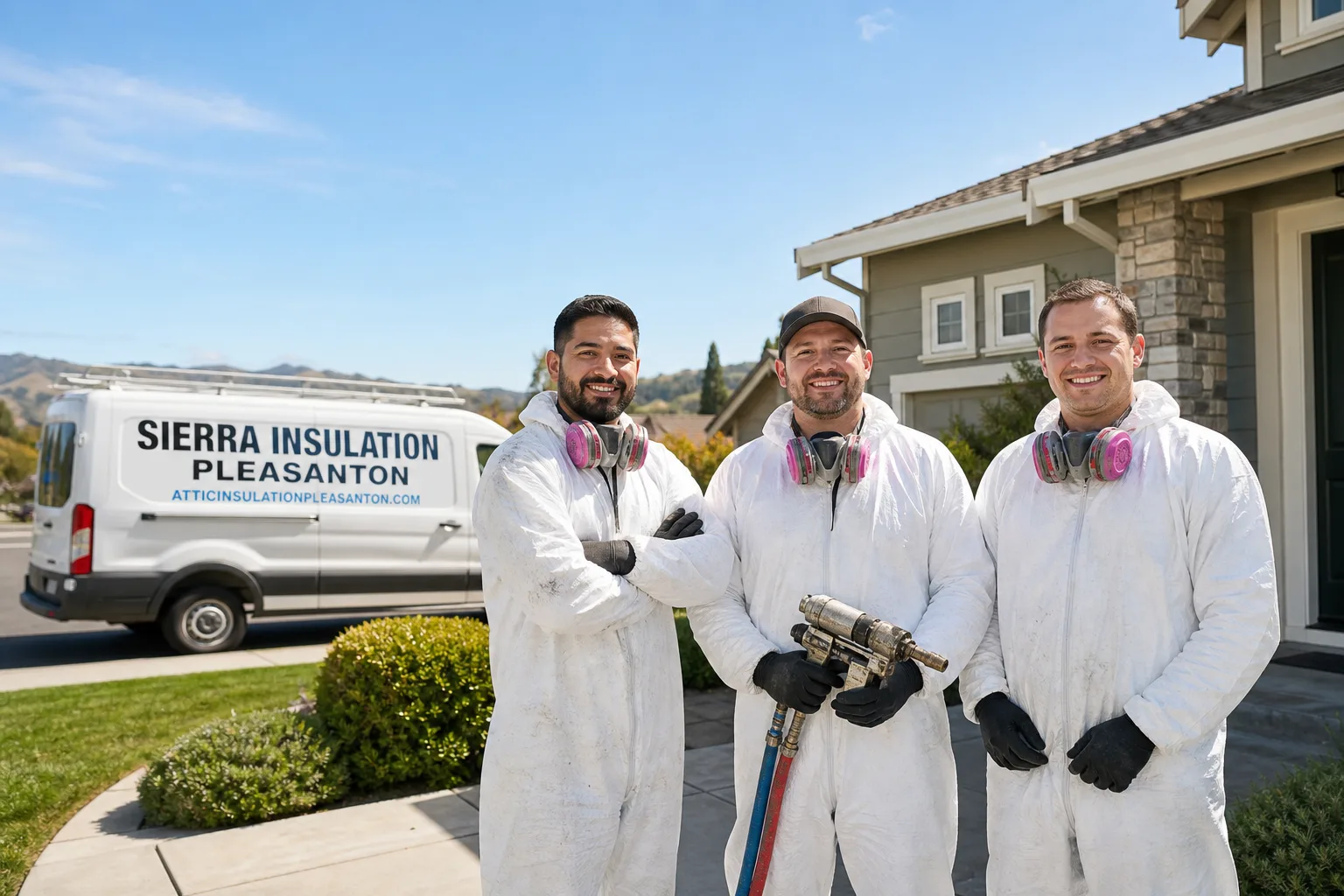
Wall insulation in Pleasanton typically costs between $1,200 and $4,800 for a complete exterior wall retrofit, with injection foam and drill-and-fill methods landing in the $1.50–$3.50 per square foot range depending on cavity depth and access. Most homes in Pleasanton built before 1980 have either no wall insulation or settled fiberglass batts that leave significant thermal voids, which is why we’re called out to inspect walls in Val Vista, Birdland, and Del Prado on a regular basis. Sierra Insulation Pleasanton is owner-operated, meaning Nate Caldwell is the person who shows up at your door, walks your walls with a thermal camera, and performs the installation himself. We don’t hand work off to subcontractors, and we don’t sell you insulation you don’t need. Call (925) 574-6007 for a free wall insulation assessment, often available same week.
Key Takeaways: Wall Insulation in Pleasanton
- Most Pleasanton homes built before 1980 have empty or underfilled wall cavities. If your house was framed in the 60s or 70s, there’s a strong chance your exterior walls have no insulation at all. We verify this with an inspection camera before recommending anything.
- Injection foam and drill-and-fill are the two primary retrofit methods for existing walls. Both install insulation from the exterior or interior without tearing out drywall, which keeps your living space intact and your project timeline short.
- Material selection is driven by your home’s actual conditions. We carry eight professional-grade insulation brands including Owens Corning, Johns Manville, Knauf, and GreenFiber, and we match the material to your wall assembly, not to whatever is leftover in the warehouse.
- Wall insulation is rarely a standalone fix. We check air sealing, attic insulation, and crawl space conditions as part of the same evaluation, because a wall retrofit without air sealing often underperforms.
What Our Wall Insulation Service Includes
Wall insulation isn’t one product or one method. It’s a category of solutions that depend on how your home was built, what’s currently inside your wall cavities, and what problem you’re actually trying to solve. We start every Wall Insulation in Pleasanton project with a diagnostic pass, not a sales pitch. Here are the four wall insulation services we perform, when each one makes sense, and what we actually do on site.
Injection Foam Wall Insulation
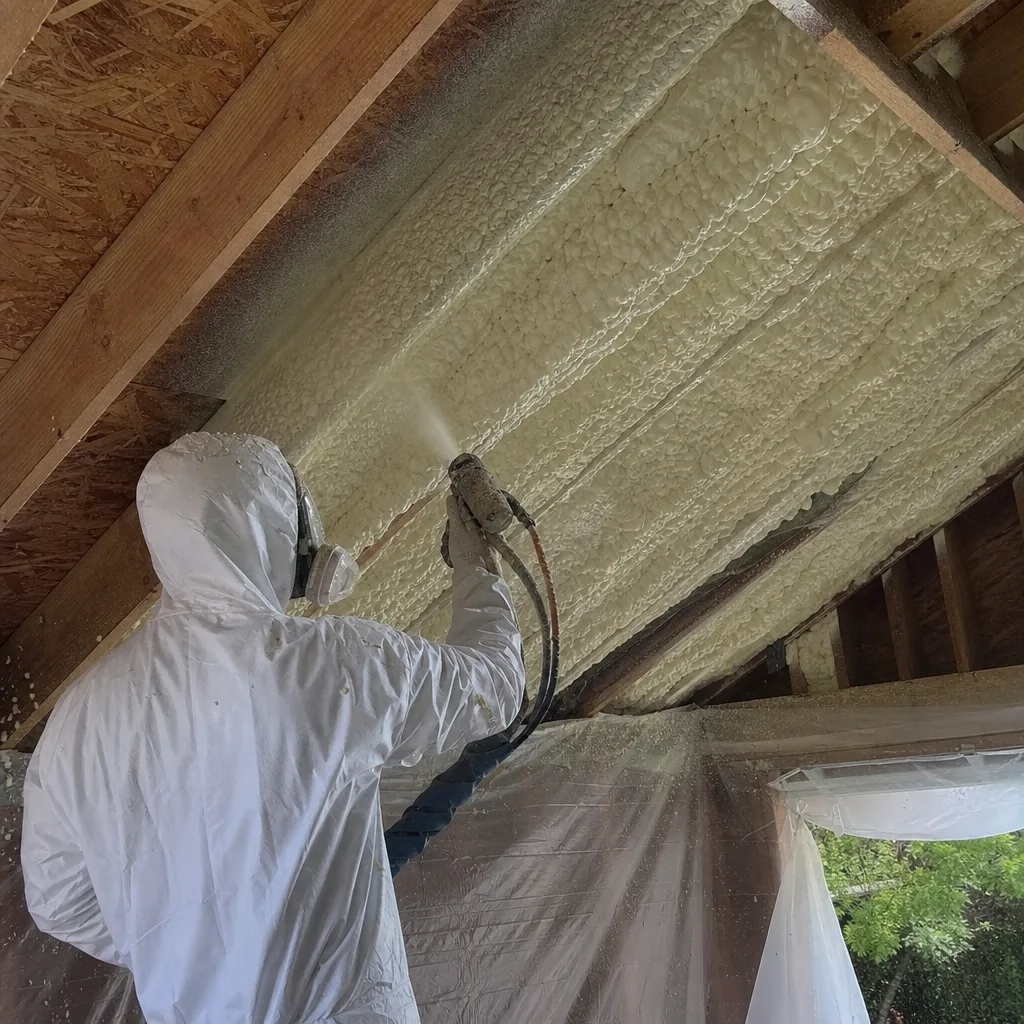
Injection foam is the go-to method for filling existing closed wall cavities without removing drywall. We drill small access holes, typically 5/8-inch to 1-inch, through the exterior siding or interior drywall, then inject a slow-expanding foam that flows into every corner of the stud bay before it sets. This method is ideal for homes in Pleasanton with exterior stucco or older wood siding where opening up walls isn’t practical or budget-friendly. We use professional two-component foam systems and monitor fill density as we work, so you get a continuous thermal barrier rather than a partial fill that leaves cold bands in your walls.
Drill & Fill Wall Insulation
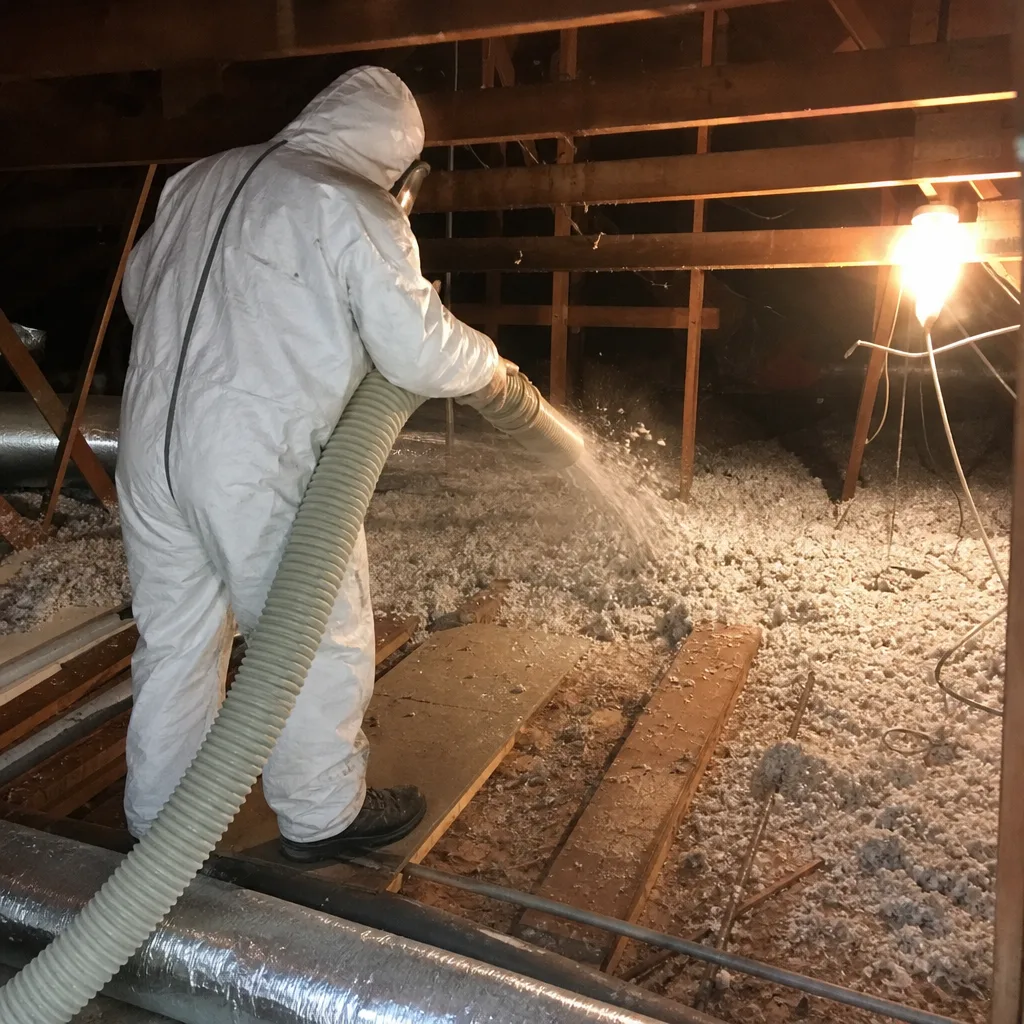
Drill-and-fill is a close cousin to injection foam, but it’s the right call when you want loose-fill insulation like blown-in fiberglass or cellulose in your existing walls. This method works well for homes in the Vintage Hills and Golden Eagle neighborhoods where wall cavities are consistent in depth and the goal is cost-effective R-value improvement. We drill access holes at each stud bay, insert a fill tube, and pack the insulation to the correct density using a calibrated blowing machine. The drilled holes are then plugged, patched, and made ready for paint or siding touch-up, leaving your wall looking like we were never there.
Exterior Wall Insulation
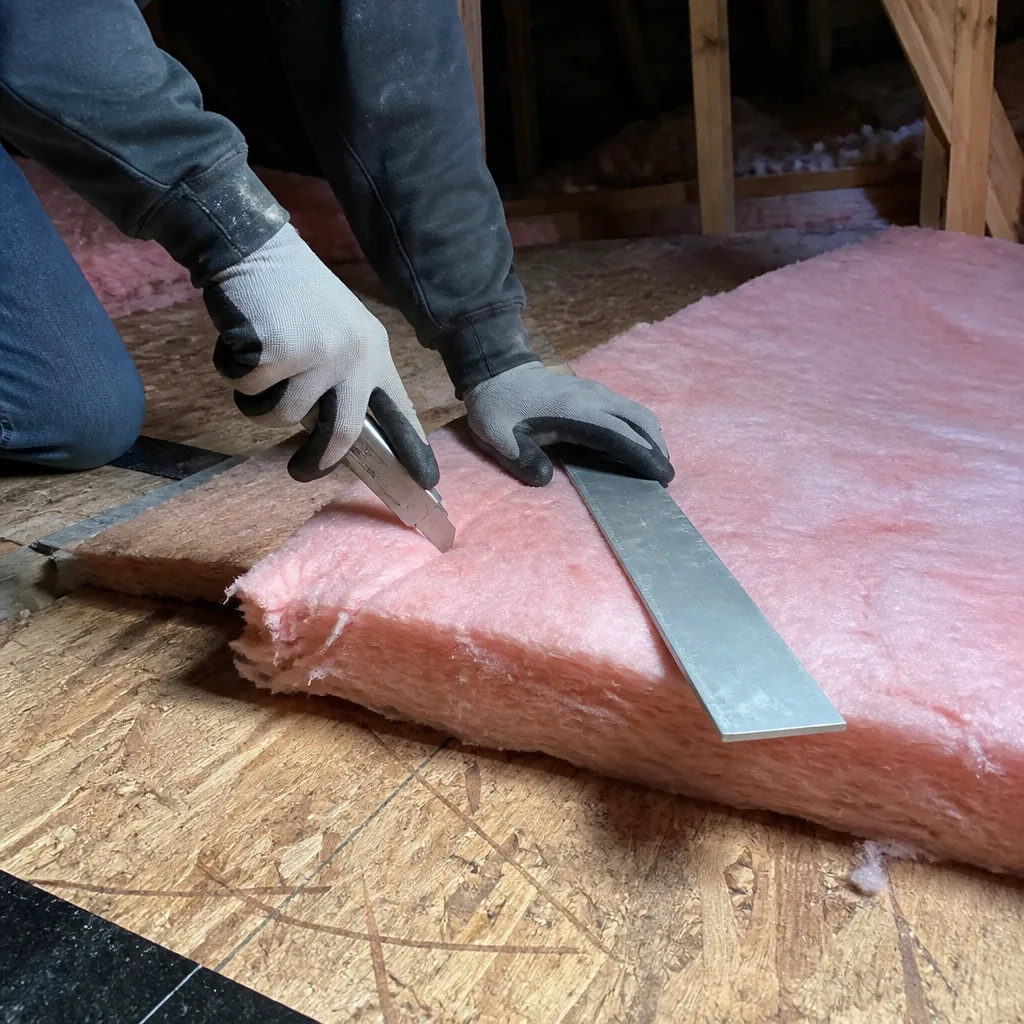
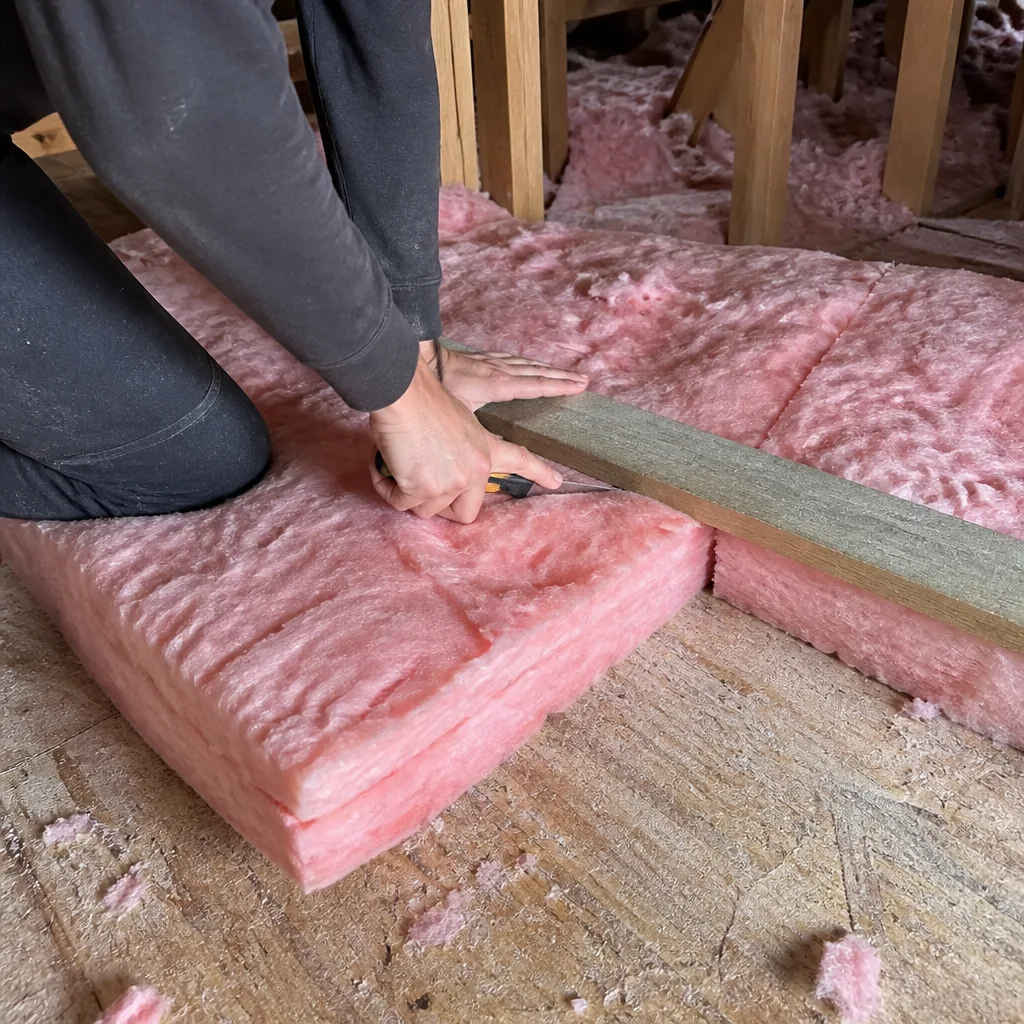
Exterior wall insulation is a different animal entirely. It applies when walls are already open during a remodel, when siding is being replaced, or when you’re building an addition and the framing is exposed. In these cases we install batt insulation, typically fiberglass from Owens Corning or Johns Manville, or mineral wool from Knauf, directly into open stud cavities before the drywall goes up. Exterior wall work gives us the chance to get a perfect fit, verify the R-value at every single bay, and layer air sealing measures into the same labor window. For homeowners in Pleasanton doing a major renovation, this is the most precise wall insulation method available.
Interior Wall Soundproofing
Interior wall soundproofing serves a completely different purpose than thermal insulation, though the installation methods overlap. We install dense mineral wool batts or specialized acoustic insulation inside interior partition walls to block sound transfer between bedrooms, home offices, and living spaces. This is common in Pleasanton homes where a garage has been converted to a guest suite or where a home office sits adjacent to a busy family room. We pair interior insulation with air sealing around electrical boxes and door frames, because sound travels through gaps just as easily as it travels through drywall. The result is a noticeably quieter room, not a marginal improvement that fades after a week.
What happens when you call
- 1
A real person answersNo phone trees — you reach a local pro.
- 2
You get an upfront price rangeHonest numbers before anyone is dispatched.
- 3
A background-checked tech heads outLicensed & insured, dispatched right away.
- 4
You approve before work beginsNothing starts until you say go.
Brands We Service for Wall Insulation
We’ve installed Owens Corning fiberglass batts in more Pleasanton homes than any other single brand, primarily because their EcoTouch line delivers consistent R-value per inch and is readily available in the specific widths and thicknesses that older stud bays demand. Owens Corning batts work well in open-wall retrofit scenarios and remodel additions, and we’re familiar with their compression characteristics, which means we know exactly how tight to fit them without sacrificing thermal performance.
Johns Manville is another batt insulation line we run regularly, and we carry both their fiberglass and mineral wool products. Their TempControl batts are particularly useful in Pleasanton homes where fire resistance matters, like attached garages and shared walls. Knauf mineral wool, sold as Insulation Board and Batt products, is our go-to when a homeowner wants superior sound control and moisture resistance in the same cavity. Mineral wool doesn’t absorb water, which makes it a smart choice for exterior walls on homes near the Arroyo Del Valle or any lot with high water table conditions. For blown-in applications, GreenFiber cellulose is our preferred material because it flows easily through drill-and-fill equipment and has a slightly higher installed density than fiberglass, which translates to better air resistance inside closed cavities.
Whether your home currently has fiberglass batts, settled cellulose, or bare stud bays, we match the replacement material to the conditions we find. Our home energy assessments start with a wall cavity inspection, not a brand recommendation, and we’ll tell you honestly if a particular brand or material doesn’t make sense for your situation.
Signs You Need Wall Insulation Right Now
- Your walls are cold to the touch in winter. Walk over to an exterior wall on a January morning and place your palm flat against the drywall. If it feels noticeably colder than the room air, your wall cavities are likely uninsulated or underfilled. This is the single most reliable field test we use before pulling out a thermal camera.
- Rooms get hot by 3 p.m., even with the AC running. Pleasanton summer heat loads are real, and walls without insulation act as thermal batteries that charge up all day and release heat into your living space well into the evening. If certain rooms in your home stay hot hours after the outside temperature peaks, the wall assembly is part of the problem.
- You can hear street noise or neighbors through exterior walls. Insulation does double duty as a sound dampener. If you can follow conversations from the sidewalk outside your bedroom window, your walls are letting sound through, which means they’re also letting heat through. Dense insulation materials like mineral wool dramatically reduce both.
- Your energy bills are high despite a newer HVAC system. We see this pattern all over Pleasanton: a homeowner installs a high-efficiency furnace or AC unit, then wonders why the utility bill barely moved. The HVAC system can only heat and cool the air it’s given. If your walls leak conditioned air through uninsulated cavities, you’re paying to heat and cool the outdoors.
- You can see light or feel drafts around wall outlets and baseboards. Electrical boxes and baseboard gaps on exterior walls are often the first place you’ll feel air movement. In uninsulated walls, those same gaps are connected directly to the outdoors through the wall cavity. It’s a small symptom that points to a much larger thermal hole in your wall assembly.
If any of these signs sound familiar, call (925) 574-6007 and we’ll schedule a wall inspection. We won’t quote you a retrofit until we’ve actually looked inside your walls.
Our Wall Insulation Process — Step by Step
Here’s exactly what happens when you call Sierra Insulation Pleasanton for wall insulation work. No mystery, no surprises, and no pressure to buy something you don’t need.
Step 1: Wall Cavity Inspection
We start by determining what’s actually inside your walls. We use a combination of an inspection camera inserted through a small access point, a non-invasive moisture meter, and a thermal imaging pass from inside the home. This tells us whether your wall cavities are empty, partially filled, or filled with settled material that has lost its R-value. This diagnostic pass is included in your free estimate, because you can’t price a wall insulation job without knowing what you’re working with.
Step 2: Air Sealing Assessment
Wall insulation without air sealing is like wearing a wool coat over a mesh shirt. We identify every air leakage point along the wall assembly, including electrical outlets, switch boxes, window and door framing, and the seam where your wall meets the floor. If attic bypasses or crawl space leaks are contributing to the problem, we’ll find those too. This is where our whole-home scope matters. A wall-only contractor will miss problems that live outside the wall, and you’ll wonder why your comfort didn’t improve.
Step 3: Material Selection and Access Planning
Based on what we found, we recommend the insulation material and installation method that fits your home’s actual conditions. If your walls are empty and your siding is stucco, injection foam or drill-and-fill from the interior might be the cleanest approach. If you’re remodeling and the drywall is coming off anyway, we’ll recommend batts for a perfect fit. We’ll explain the R-value you can expect, how we’ll restore the access points, and what the project will look like from start to finish.
Step 4: Installation
Nate Caldwell performs the installation personally. This isn’t a job we hand to a rotating crew. For injection foam and drill-and-fill, we’ll create access points at each stud bay, install the insulation to specification, and verify fill density or batt fit before moving on. For open-wall work, we’ll install batts tight to the framing, notch around electrical and plumbing penetrations, and seal every gap with foam or caulk. We keep your home clean, protect your floors and furniture, and clean up completely before we leave.
Step 5: Verification and Final Air Seal
Once the wall insulation is in place, we do a final thermal imaging pass and visual inspection to confirm that every cavity is filled to spec. We re-check all air sealing points, patch and restore all access holes, and walk you through what was done and exactly what you should expect in terms of comfort and energy performance. You get a clear summary of materials installed, R-values achieved, and any remaining recommendations for other parts of your thermal envelope.
How Much Does Wall Insulation Cost in Pleasanton?
A typical wall insulation retrofit in Pleasanton runs between $1,200 and $4,800, depending on the size of the home and the method used, according to our Wall Insulation cost guide. Here’s what we see most often:
| Service | Typical Range | Notes |
|---|---|---|
| Injection foam wall insulation (per sq ft of wall) | $2.75–$3.50 | Best for closed cavities, stucco exteriors, complete fill |
| Drill & fill insulation (per sq ft of wall) | $1.50–$2.75 | Best for consistent cavities, budget-conscious retrofits |
| Exterior wall batt installation (per sq ft of wall) | $1.25–$2.50 | Labor only, open-wall remodel scenarios |
| Interior wall soundproofing (per sq ft of wall) | $2.00–$4.00 | Depends on mineral wool vs. acoustic batt material |
Three factors move the price more than anything else: access difficulty (interior-only access costs more than exterior), cavity depth (2×6 walls cost more than 2×4 walls because they hold more material), and the condition of your existing wall assembly (homes with fire blocking and diagonal bracing require more drill points and more labor). The single biggest mistake Pleasanton homeowners make is comparing bids without verifying what’s included. A low bid often means no air sealing, minimal access-hole patching, or a fill density that’s been dialed down to save material. We quote wall insulation as a complete package: inspection, air sealing at every access point, installation, verification, and restoration. Your free estimate from (925) 574-6007 includes a written scope of work with every line item spelled out, so you can compare bids honestly.
Wall Insulation Near Pleasanton — Our Service Area
We serve Pleasanton and the surrounding Tri-Valley and Bay Area communities, including Newark, Sunol, Union City, Milpitas, Menlo Park, Mountain View, and Palo Alto. Most wall insulation projects in Pleasanton are scheduled within one to two weeks of the initial inspection, and we routinely complete drill-and-fill retrofits on a standard ranch home in a single day. We also offer wall insulation services throughout Pleasanton with diagnostic-first pricing, so you’re never paying for work you didn’t need.
Serving Pleasanton, CA — Our Local Coverage Area
We’re based in the Pleasanton area and know this community well, and we also provide Wall Insulation in Sunol. Use the map below to see our service coverage — if you’re nearby, we can almost certainly help.
Frequently Asked Questions — Wall Insulation in Pleasanton
Wall insulation is any material installed inside the wall cavities of your home to slow heat transfer between the outdoors and your living space. In Pleasanton’s climate, wall insulation keeps heat out during summer and holds it in during winter, directly affecting both comfort and energy costs, and we offer the same expertise for Wall Insulation in Union City. The most common materials are fiberglass batts, cellulose, injection foam, and mineral wool, and the right choice depends on whether your walls are already closed or exposed during a remodel.
Most wall insulation retrofits in Pleasanton take one to two days from first drill hole to final patch. A standard three-bedroom ranch with accessible exterior walls can often be completed in a single day using drill-and-fill methods. Larger homes, two-story wall assemblies, and projects requiring interior-only access may take two to three days. We’ll give you a firm timeline at the estimate stage, and we stick to it.
Wall insulation costs in Pleasanton typically range from $1,200 to $4,800 for a complete retrofit, depending on home size, cavity depth, and access difficulty. Per-square-foot pricing ranges from $1.25 for open-wall batt installation to $3.50 for injection foam in closed cavities. Your free estimate includes a detailed line-item quote so you know exactly what you’re paying for. Call (925) 574-6007 for specific pricing after we inspect your walls.
Yes, we work with Owens Corning and Johns Manville insulation on a regular basis, along with Knauf, Rockwool, CertainTeed, Icynene, Demilec, and GreenFiber. We stock and install materials from all eight of these professional brands, so we’re not locked into one manufacturer’s product line. The material we recommend for your walls is based on what your home’s construction actually needs, not on what we happen to have in stock that week.
We can often schedule wall inspections within one to two business days in Pleasanton and immediate surrounding areas, and installation typically follows within one to two weeks depending on scope. Same-week availability is common during winter and spring when our schedule is most flexible. If you’re dealing with a comfort emergency or a failed insulation situation, call (925) 574-6007 and we’ll do our best to work you in.
Our workmanship is covered by a workmanship warranty, and the insulation materials we install carry manufacturer warranties through brands like Owens Corning and Johns Manville. That means if a material defect appears, the manufacturer stands behind it. We’ll explain exactly what’s covered, for how long, and in writing before any work begins, so you’re never relying on a verbal promise.
For drill-and-fill and injection foam work, we’ll ask you to move furniture and wall hangings at least three feet away from any exterior walls we’ll be accessing. If we’re working from the interior, we’ll protect your floors and furniture with drop cloths and seal off the work area to contain dust. For open-wall remodel work, you’ll need to have the drywall or siding removed before we arrive, and we’ll coordinate directly with your general contractor if you have one.
Schedule Your Wall Insulation Service in Pleasanton Today
If your walls are cold in winter, hot in summer, or letting in more noise than they should, the fix is straightforward. Call Sierra Insulation Pleasanton at (925) 574-6007 and schedule a free wall insulation inspection. Nate Caldwell will come out, look inside your walls, and give you a written quote that covers exactly what you need. No pressure, no subcontractors, no guesswork.
Written by Nate Caldwell, Owner at Sierra Insulation Pleasanton, serving Pleasanton and the surrounding Bay Area.