Fast, Reliable Attic Insulation Across East Foothills
Attic insulation in East Foothills carries a compliance layer most Bay Area contractors never deal with: California Building Code Chapter 7A. Because the neighborhood sits within the Very High Fire Hazard Severity Zone on the Diablo Range’s lower slopes, every attic insulation or air-sealing job here must meet ember-resistance standards that flat San Jose tracts like Berryessa simply do not face. We know those requirements cold, and we know the 1950s-to-1970s ranch and split-level homes they apply to. If you’re losing conditioned air through a pre-Title 24 attic or dealing with rooms that never hold temperature, call Sierra Insulation Pleasanton at (925) 574-6007. Nate Caldwell, our owner, leads every East Foothills install personally.
Why Sierra Insulation Pleasanton Is East Foothills’s Preferred Attic Insulation Company
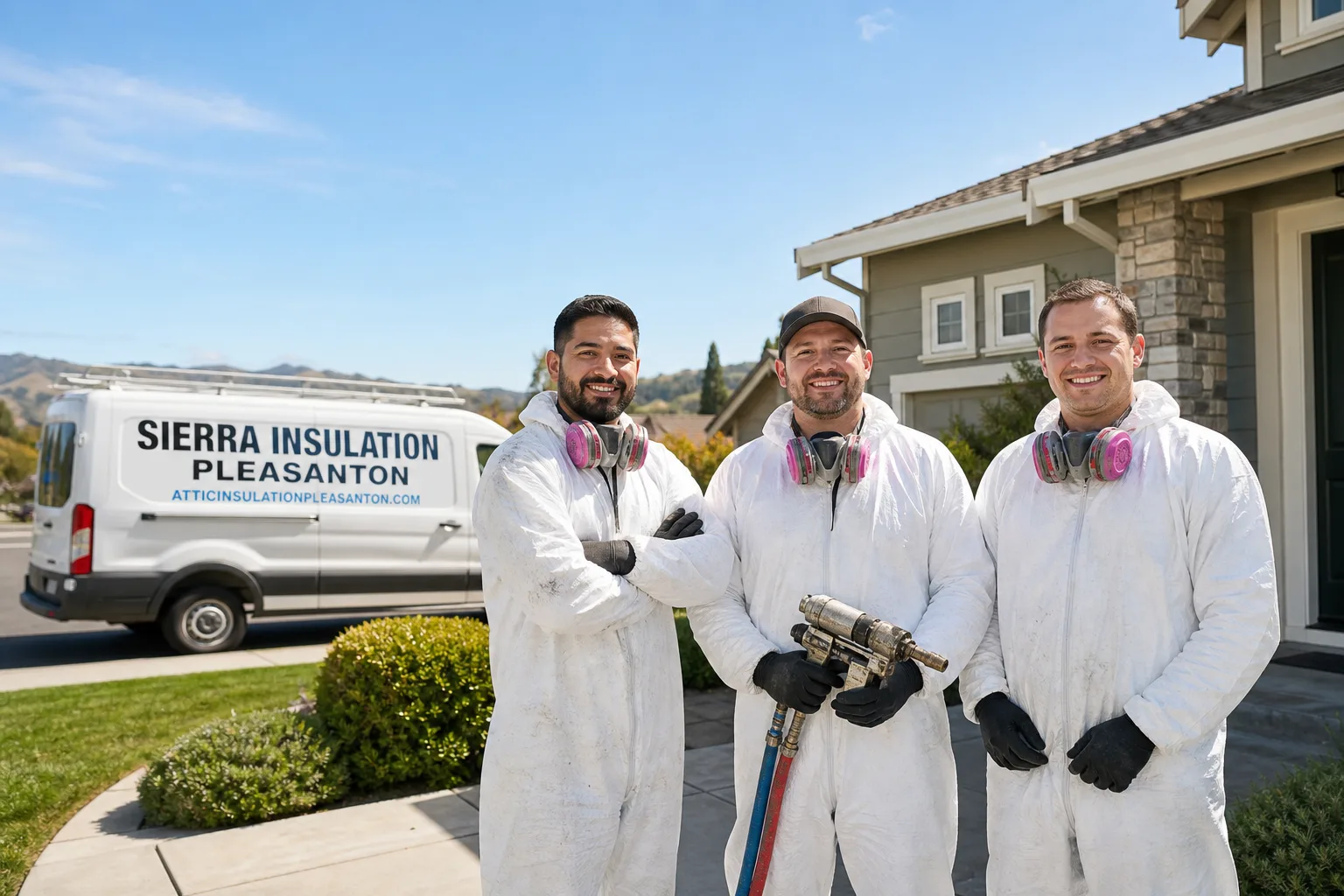
Most insulation companies send a crew. We send the owner. Nate Caldwell is on site for every East Foothills attic job, from the initial diagnostic walkthrough to the final air-seal check. That means the person you talk to about your home’s thermal envelope is the same person pulling the old insulation and installing the new material. No handoff, no telephone game, no third-party crew learning your house on the fly.
We stock eight professional material brands, including Owens Corning, Johns Manville, and Knauf. That breadth matters in East Foothills because hillside homes here frequently need material combinations a single-brand installer cannot provide. A south-facing split-level off Sierra Road might need Rockwool mineral wool for fire resistance in one attic section and blown-in fiberglass for R-value in another. We match the material to the house, not to whatever is sitting in our warehouse.
Our East Foothills customers call us because we show up with the code book in our head and the right material on the truck. From energy audit to final air seal, the entire scope stays under one accountable specialist. We find the problem before we sell you the fix.
Our Attic Insulation Services in East Foothills
Attic Baffles & Ventilation Prep
This is where Chapter 7A compliance and thermal performance collide. East Foothills attics need ember-resistant vent covers that also preserve proper soffit-to-ridge airflow. Original vents from the 1960s and 1970s are usually rusted through or screened with mesh that fails ember-intrusion testing. We install compliant vent covers, clear or replace baffles so blown-in material never blocks the eave airflow path, and verify that air actually moves through the attic. Skip this step and the insulation you paid for underperforms from day one.
Attic Insulation Top-Up
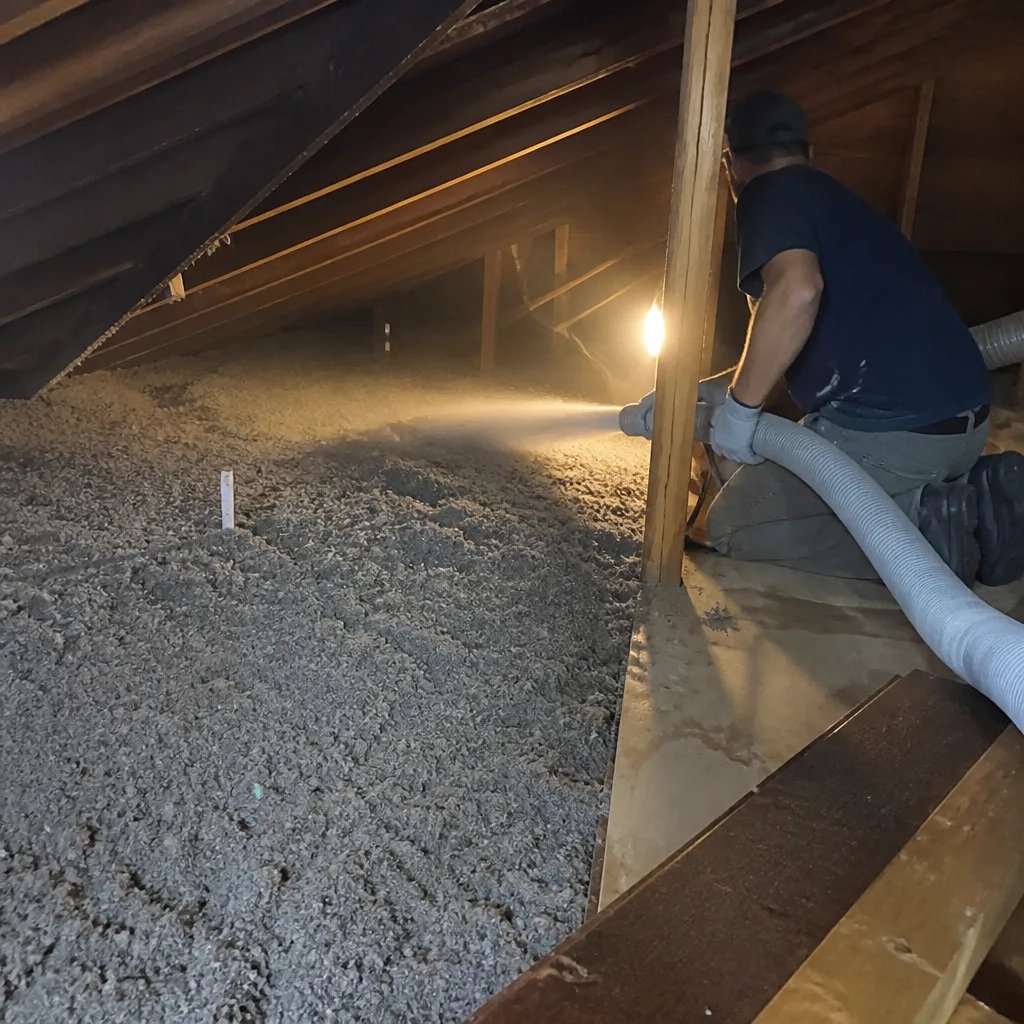
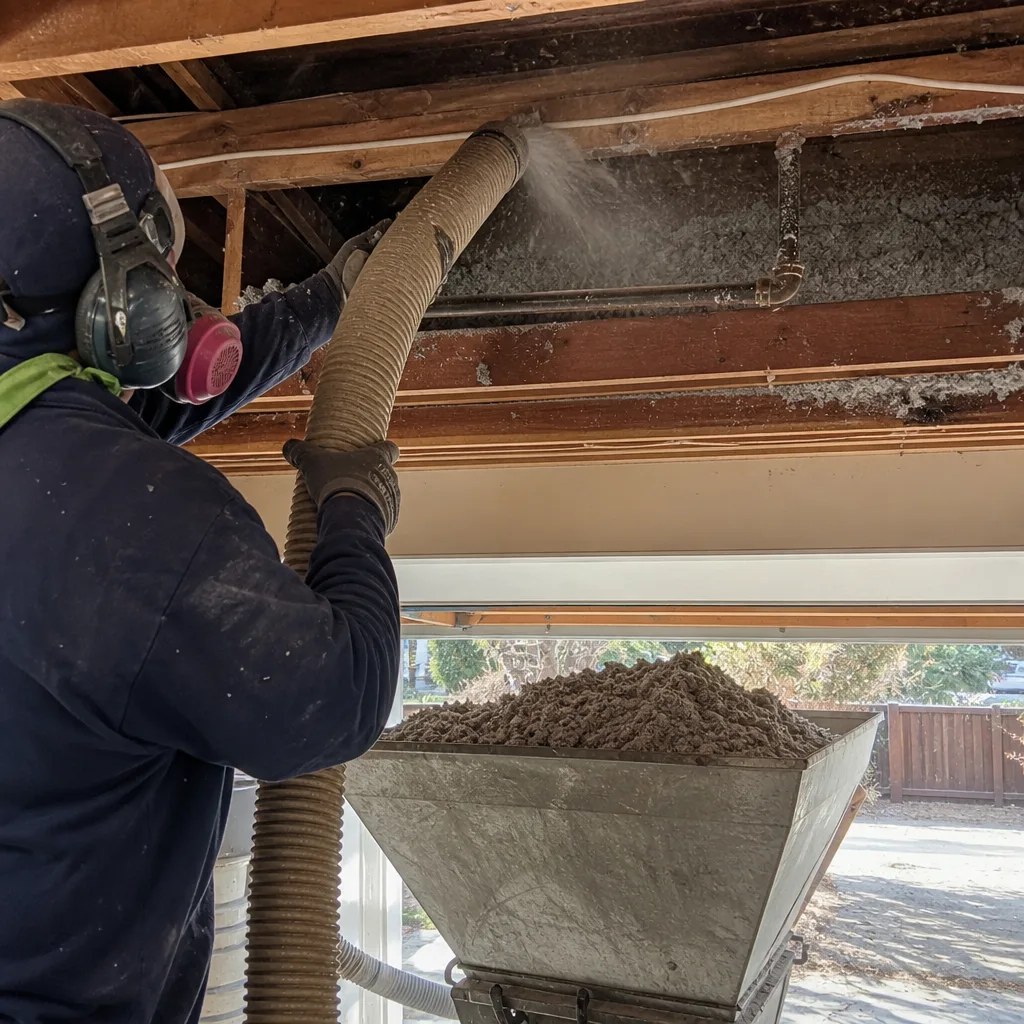
Many East Foothills attics still have their original thin layer of loose-fill or degraded fiberglass batts from original construction. A top-up adds blown-in fiberglass over the existing material to bring total depth up to R-38 or R-49. Typical costs in East Foothills run $1,400 to $2,800 depending on attic square footage and access. We only recommend a top-up after confirming the existing material is dry, free of rodent contamination, and not blocking any ventilation path. In older East Foothills homes with moisture or pest issues, removal and replacement is the honest call.
Attic Insulation Replacement
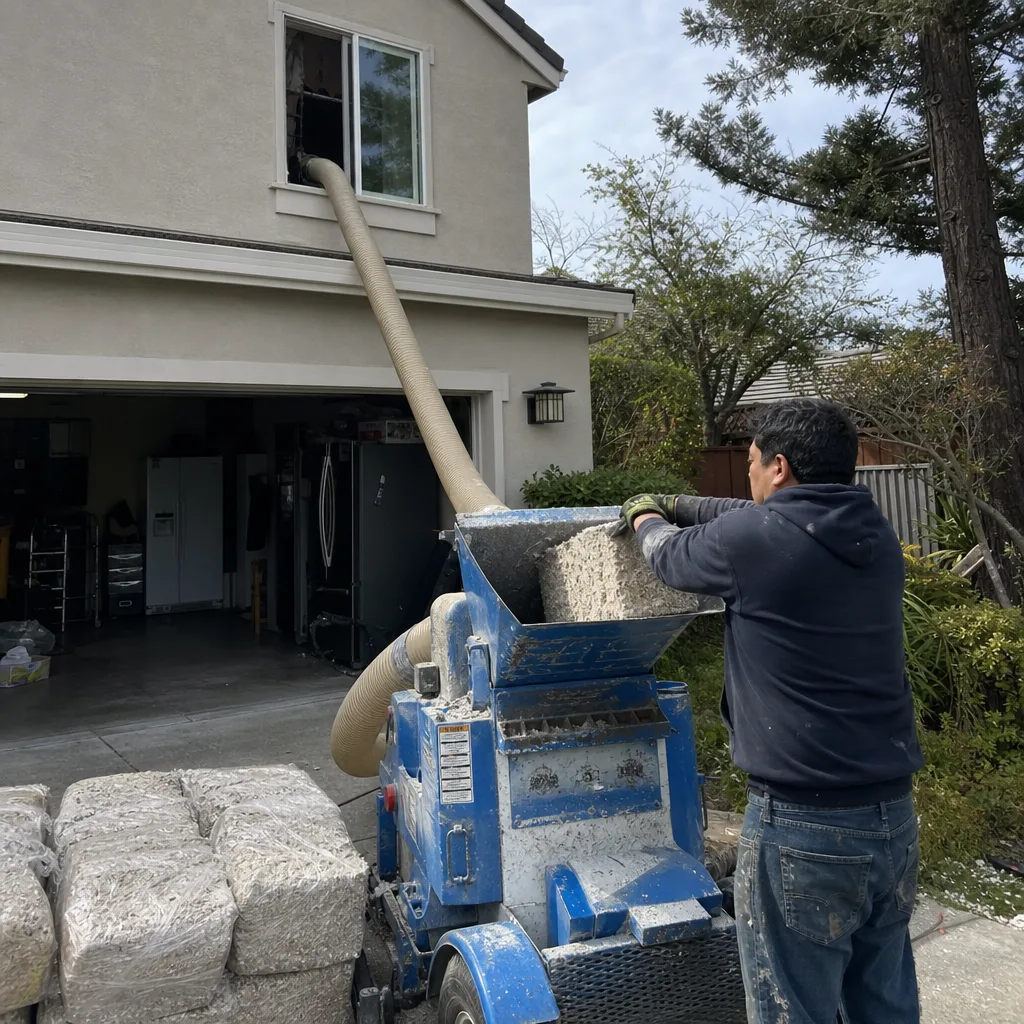
When we pull out old East Foothills attic insulation, we usually find things the homeowner never saw: rodent tunnels through the batts, compressed material caked with decades of hillside dust, and eave vents packed shut by previous blown-in work. Replacement gives us a clean substrate to air-seal top plates, wire penetrations, and plumbing chases before any new insulation goes in. A full removal and replacement for a typical 1,200-to-1,800-square-foot East Foothills ranch runs $2,200 to $4,500. The price reflects disposal of the old material, air sealing, and new blown-in fiberglass to current Title 24 depth.
Attic Batt Insulation
For accessible attic cavities with standard joist spacing, fiberglass or mineral wool batts are a clean, predictable option. We install Owens Corning and Rockwool batts in East Foothills attics where the layout calls for fire resistance or where the homeowner wants a material that is easy to move aside for future electrical or HVAC work. Batt projects in East Foothills typically run $1,100 to $2,400. Rockwool runs higher because of the material itself, but its fire rating is worth the difference in a Chapter 7A zone.
What happens when you call
- 1
A real person answersNo phone trees — you reach a local pro.
- 2
You get an upfront price rangeHonest numbers before anyone is dispatched.
- 3
A background-checked tech heads outLicensed & insured, dispatched right away.
- 4
You approve before work beginsNothing starts until you say go.
Common Attic Insulation Problems We See in East Foothills Homes
- Pre-Title 24 wall cavities bleeding conditioned air into the attic. Homes built before California’s energy code existed frequently have zero wall insulation. The attic gets blamed for heat loss, but the real problem is air moving through unsealed framing into the attic space. Air-sealing comes before insulation; insulation alone will not fix a stack-effect leak.
- South- and west-facing rooflines cooking the attic. East Foothills sits behind the Diablo Range, shielded from the Bay’s cooling marine layer. Summer attic temperatures here run measurably hotter than the valley floor below. Fiberglass batts lose effective R-value when heat loads are extreme, which is why we pair insulation with proper ventilation prep and, where solar gain is severe, radiant barrier discussion.
- Open under-floor cavities on hillside split-levels. The stepped crawl spaces under many East Foothills homes often connect directly to attic framing cavities. Without air sealing at the rim joist and top plates, drafts bypass attic insulation entirely and pull conditioned air out of the house. This is a site condition flatland tract homes do not have.
- Original loose-fill packed against unrated eave vents. We see this repeatedly on the 1960s and 1970s ranches along Sierra Road and around the Alum Rock foothills. Someone blew insulation decades ago, it drifted into the eave vents, airflow stopped, and the attic became a hot, damp box. The fix is pulling the old material, installing ember-resistant baffled vents, and blowing in new fiberglass correctly.
Pricing for Attic Insulation in East Foothills, CA
Here are the numbers we give East Foothills homeowners on the phone before we ever step on site. Blown-in attic insulation to R-38 in a standard 1,200-square-foot attic runs $1,800 to $3,200. Batt insulation projects land between $1,100 and $2,400. A top-up over existing material costs $1,400 to $2,800. Full removal and replacement, including air sealing, is $2,200 to $4,500. Attic baffle and ventilation prep work runs $400 to $1,100 depending on how many vents need replacing and whether we are opening up clogged soffit paths. What moves the price: attic square footage, access difficulty on a sloped lot, whether old material needs disposal, and whether rodent or moisture remediation is required first. We give free estimates, and the number we quote is the number you pay unless we find something that changes scope, which we discuss before touching anything.
Our East Foothills Chapter 7A Expertise
East Foothills sits within California’s Very High Fire Hazard Severity Zone, placing most residential streets under California Building Code Chapter 7A requirements for ember resistance. That means attic vents must have openings small enough to block burning embers, and insulation cannot be packed against unrated vent screens. A contractor who works flatland San Jose jobs in Berryessa or Alum Rock may not know this. We do. Every attic insulation or air-sealing project we run in East Foothills includes a check of vent compliance before and after we install material. If your vents are not Chapter 7A compliant, we flag it and fix it. If a real estate transaction is pending, that distinction can be the difference between closing and a failed inspection.
One example from our own work: on a split-level ranch off Sierra Road, our crew found an attic where Code 7A violations had already flagged a pending real-estate sale. Original 1972 loose-fill insulation was packed against unrated eave vents, and the vent screens were rusted through. We pulled the old material, installed ember-resistant vents, blew in Owens Corning AttiCat fiberglass to R-38, and air-sealed the top plates. The seller closed escrow the following week because the attic inspection passed on the first recheck. That is the difference between a contractor who knows East Foothills code and one who does not.
Why the Hillside Changes the Insulation Conversation
Hillside split-level homes throughout East Foothills commonly have open, uninsulated under-floor cavities that slope with the terrain. These spaces are nearly impossible to insulate with batts and require blown-in or spray foam. They also collect hillside groundwater seepage in wet winters. We routinely find that moisture remediation must precede any insulation install in these cavities, a site condition almost never encountered in the flat 1960s tracts a mile downhill. This is not a generic attic job. It is a thermal envelope problem specific to how East Foothills homes were built and where they sit. Our Attic Insulation team handles the full envelope, not just the attic floor, because in East Foothills the attic, walls, and under-floor cavities all talk to each other.
Trusted Brands We Install in East Foothills
We carry eight professional material brands and choose among them based on what your East Foothills home actually needs. Owens Corning AttiCat and Johns Manville Climate Pro are our most common blown-in fiberglass lines for standard attic depth. Knauf batts cover accessible joist bays where the homeowner wants a clean, predictable install. Rockwool mineral wool goes into attics where fire resistance is the priority, which on a VHFHSZ hillside is a frequent request. We do not push one brand. We pick the material that matches the R-value target, the moisture profile, and the fire-safety context of the house.
We Also Serve Cities Near East Foothills
Our team covers Attic Insulation in East Foothills and the surrounding East Bay and South Bay foothill communities, including Pleasanton, Newark, Sunol, and Union City. If you are just over the hill or down in the flatlands and need a specialist who understands Chapter 7A and hillside construction, call us at (925) 574-6007.
Serving East Foothills, CA — Our Local Coverage Area
We’re based in the East Foothills area and know this community well. Use the map below to see our service coverage — if you’re nearby, we can almost certainly help.
FAQs — Attic Insulation in East Foothills
Because East Foothills sits inside California’s Very High Fire Hazard Severity Zone, which triggers California Building Code Chapter 7A ember-resistance requirements for all new construction and significant attic retrofits. This applies to attic vent screening, material selection, and how insulation interfaces with vents. Flat valley-floor neighborhoods like Berryessa and Alum Rock are outside the VHFHSZ and have no equivalent mandate. If your East Foothills home has unrated vents or insulation blocking eave airflow, a permitted attic insulation project will not pass inspection until those issues are corrected. Call (925) 574-6007 and we will check your vents before we quote anything.
Yes, most have a thin layer of original loose-fill or degraded batts, but it is almost never adequate. The 1950s-to-1970s ranch and split-level homes that dominate East Foothills were built before Title 24 energy standards, so attic insulation depths typically fall far short of today’s R-38 to R-49 requirement. Some of these attics received a cheap top-up decades ago that has since compressed or been contaminated by rodents. We frequently find original material in East Foothills attics that measures closer to R-8 than R-38. The fix is usually a top-up to current depth, or full replacement if the old material is compromised.
Only if the existing material is dry, uncontaminated, and not blocking ventilation paths. We inspect before we recommend a top-up. In many East Foothills attics, the old material is packed against unrated eave vents, filled with rodent droppings, or damp from hillside moisture migrating upward. Those conditions require removal and replacement, not a top-up. When the old material is clean and dry, blowing Owens Corning AttiCat or Johns Manville fiberglass over it is a cost-effective way to reach R-38 or R-49. Free inspection and estimate: (925) 574-6007.
For most East Foothills homes built before Title 24, yes. Uninsulated wall cavities and unsealed framing connections let conditioned air pour into the attic, and no amount of insulation stops airflow. Air sealing the top plates, wire penetrations, plumbing chases, and rim joists is the step that makes insulation perform. In hillside split-levels, open under-floor cavities compound the problem by creating stack-effect pathways that bypass the attic entirely. We air-seal before we insulate, every time. Sealed, insulated, and verified.
Yes, because split-levels have stepped floor cavities and sloped under-floor spaces that often connect to attic framing. Air and heat move through those pathways differently than in a simple single-story ranch with a single attic plane. Split-levels in East Foothills frequently need blown-in or spray foam in the under-floor cavities in addition to attic insulation, and the air-sealing scope is bigger because the framing connections are more complex. The material choice may also shift toward Rockwool or closed-cell foam where fire resistance and moisture resistance both matter. Call (925) 574-6007 and we will tell you exactly what your split-level needs based on how it was framed, not on a generic attic formula.
Written by Nate Caldwell, Owner at Sierra Insulation Pleasanton, serving East Foothills and the surrounding foothill communities.