
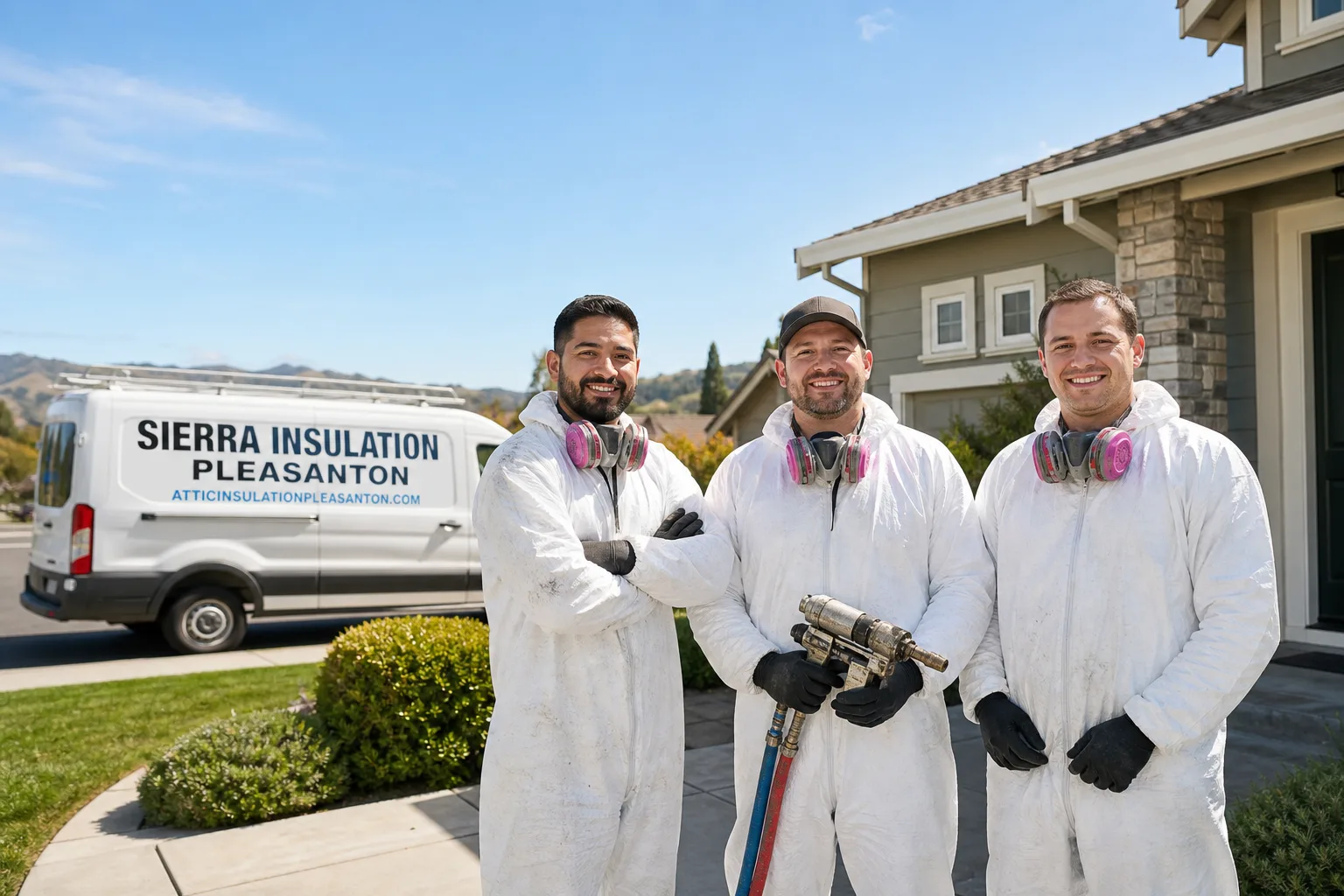
Fast, Reliable Crawl Space Encapsulation & Vapor Barrier in San Carlos
Crawl space encapsulation in San Carlos typically runs $6,500–$14,000 for a full system on an average 1,200–1,800 sq ft home, while a standalone 10-mil vapor barrier runs $2,800–$4,800. Most jobs are completed in one to two days, and we schedule within the same week for most San Carlos neighborhoods, including the fog-heavy hills above Arroyo Avenue. If your floors feel cold in January or you’ve caught that musty smell from the vents, the crawl space is usually where it starts. Call (925) 574-6007 and we’ll walk it with you, moisture meter in hand, before recommending anything.
Why the Hills Above Arroyo Avenue Are Different
San Carlos sits squarely in the Peninsula’s coastal fog belt. The western hill neighborhoods, the streets climbing above Arroyo Avenue and toward the open space, sit in a persistent marine layer from May through August. That means crawl spaces up there accumulate significantly more ambient moisture than flatland Redwood City just a few miles south. A vapor barrier is not an upsell in those homes; it’s the difference between a dry foundation and rot you don’t see until the floor feels soft.
We see the same failure mode repeat itself in the 1945–1965 ranch homes and split-levels that dominate San Carlos. Builders of that era skipped wall-cavity insulation entirely and laid down the bare minimum in attic and floor assemblies. In the hillside properties with stepped pier-and-beam foundations, original rock wool or early-generation fiberglass batts in the crawl space have compressed into a damp, near-useless mat from years of fog-driven moisture. That material has lost its R-value and is often hiding active wood rot against the rim joists. Complete removal is the only fix; topping off over failed material just seals the moisture in.
In the hills above Arroyo Avenue, our crew pulled original rock wool from a 1950s stepped-foundation crawl space that had compressed into a damp, near-useless mat. We removed the failed material, sealed vents with a 10-mil reinforced vapor barrier, and installed Owens Corning rigid foam against the rim joists to stop fog-driven moisture from re-wetting the assembly. That’s the kind of repair that shows up on the moisture meter, not in a brochure.
And with PG&E rates among the highest in the nation, these older San Carlos homes are paying a double penalty: conditioned air leaking out through unsealed floors and rim joists, and moisture driving up latent cooling load in the summer. Crawl Space Encapsulation & Vapor Barrier work in this city delivers outsized energy savings precisely because the housing stock starts from such a compromised baseline.
Key Takeaways for San Carlos Homeowners
- Hillside homes above Arroyo Avenue need heavier vapor management than flatland San Carlos; the fog corridor is real and measurable.
- Original rock wool and early fiberglass in 1950s crawl spaces typically can’t be reused; removal is standard.
- Stepped pier-and-beam foundations require sealing at rim joists and band boards, not just on the floor.
- Sierra Insulation owner Nate Caldwell leads every San Carlos job personally, diagnose to finish.
- Free estimates with moisture readings, not just eyeballing; call (925) 574-6007.
Our Crawl Space Encapsulation & Vapor Barrier Services in San Carlos
Crawl Space Vapor Barrier
A floor-only vapor barrier in San Carlos is the minimum spec we recommend, and in the hills it’s not enough by itself. We install 10-mil reinforced polyethylene with all seams overlapped at least 12 inches and taped, plus mechanical fastening at the foundation walls. In flatland San Carlos near US-101, a floor barrier with sealed piers works well; in the western hills, we extend the barrier up the stem walls and seal to the sill plate to stop fog-moist air from condensing on the rim joists.
Crawl Space Encapsulation
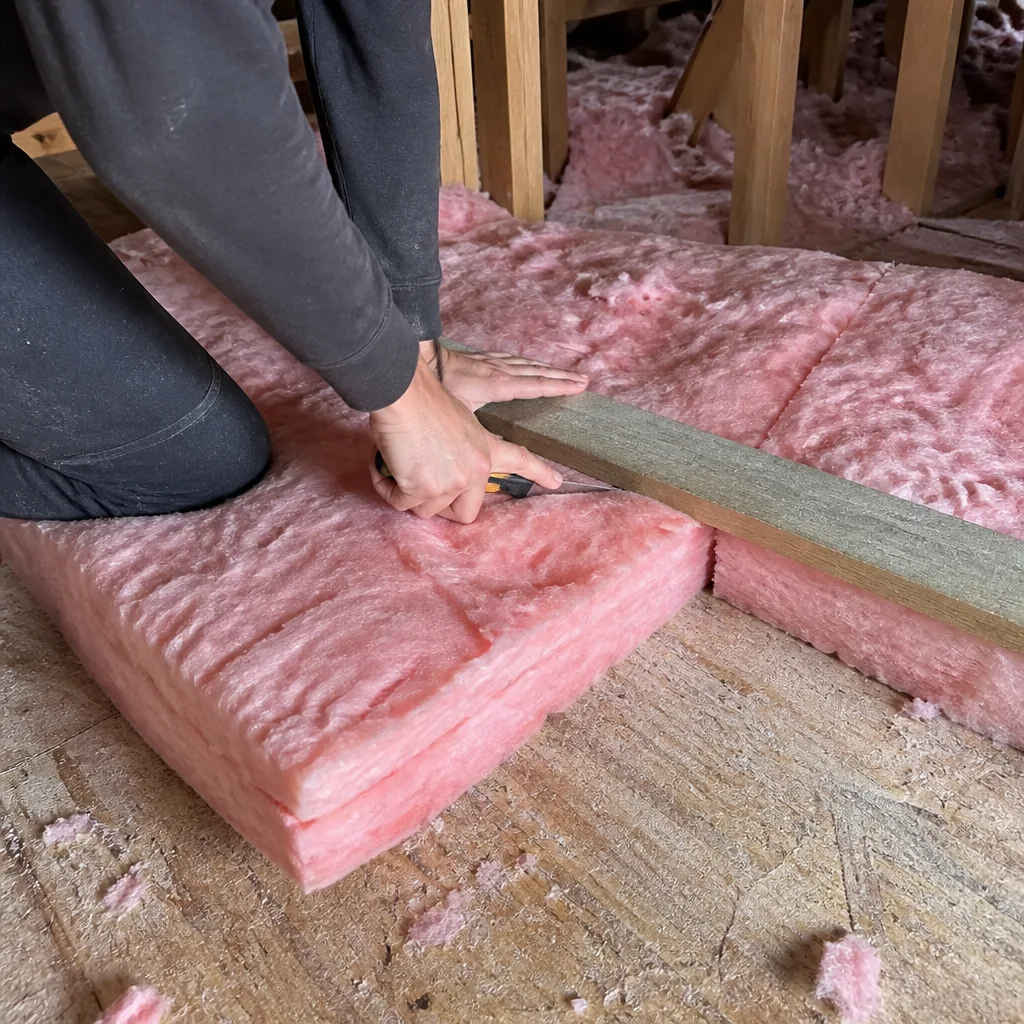
Full encapsulation in San Carlos means sealing the entire crawl space: floor, walls, rim joists, and any vents. We close off exterior vents, install closed-cell spray foam or rigid foam at the rim, and run a dehumidifier sized to the cubic footage. For homes in the fog corridor, encapsulation is the only way to keep the crawl space genuinely dry year-round. For tight-clearance San Carlos townhomes with alley-load access, we adapt: smaller equipment, sequential material passes, and careful planning around plumbing stacks.
Crawl Space Insulation
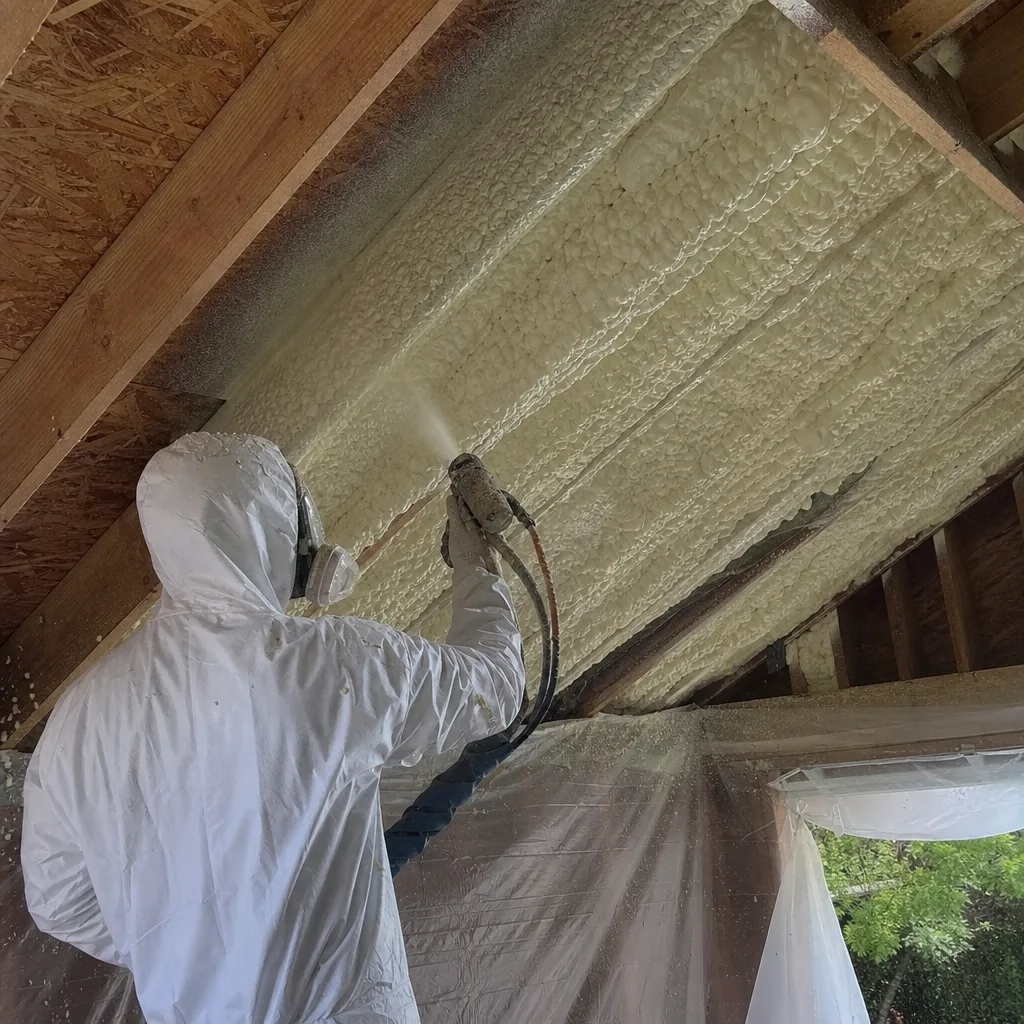
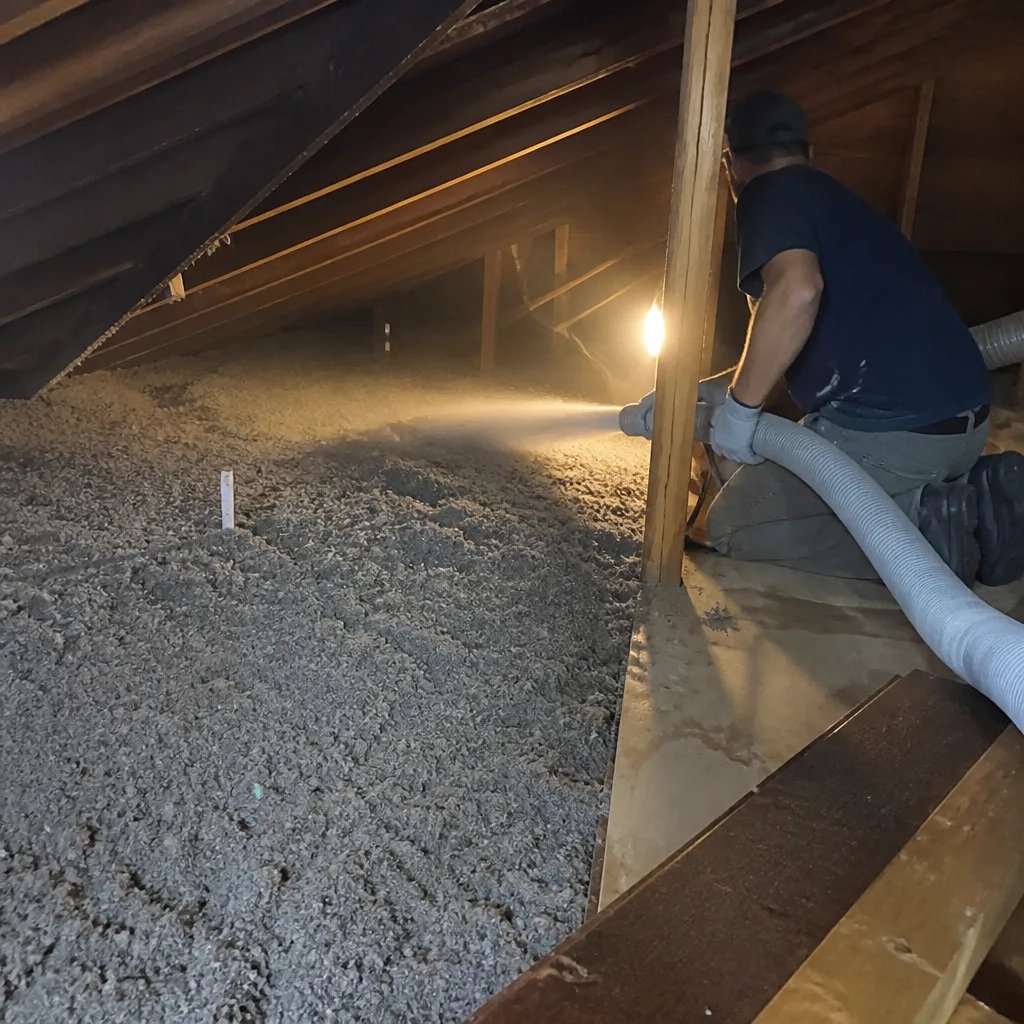
Once the vapor barrier or encapsulation is in place, we address the thermal layer. In San Carlos, the right material depends on where the home sits. Rigid foam board (Owens Corning or Johns Manville) works well against rim joists and band boards on hillside pier-and-beam homes. Closed-cell spray foam handles irregular stepped foundations better than any batt. Knauf mineral wool offers fire resistance and water resistance that make it a good choice for drier flatland crawl spaces where code clearance requires a non-flammable material.
Crawl Space Moisture Control
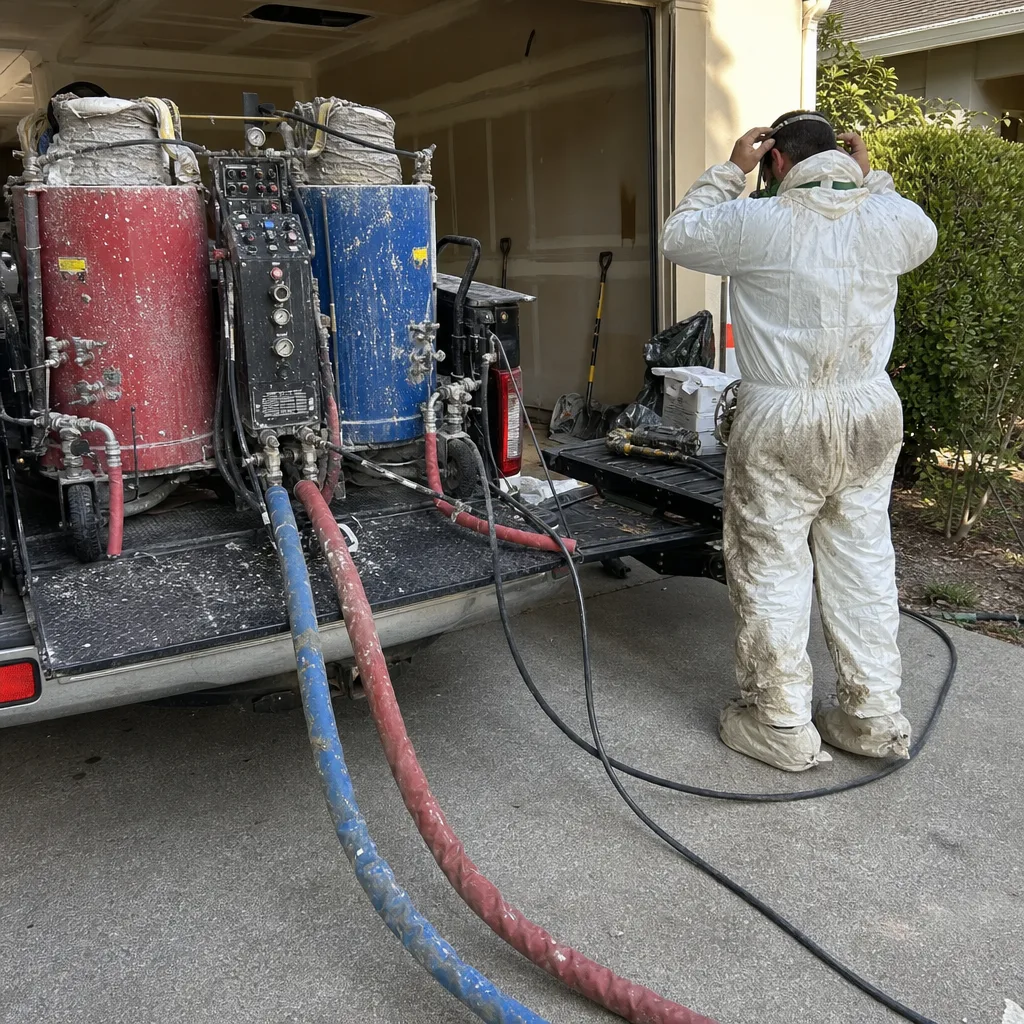
Moisture control in San Carlos starts with diagnosis. We measure wood moisture content in floor joists and girders, check relative humidity at the foundation vents, and look for the telltale signs: efflorescence on stem walls, rusted post bases, mold on the subfloor underside. In the hills above Arroyo Avenue, ambient RH in a vented crawl space can run above 80% all summer. Sealing the space and adding a dehumidifier brings it down to a stable 50–55%, which stops mold growth and extends the life of wood framing.
Crawl Space Cleanout
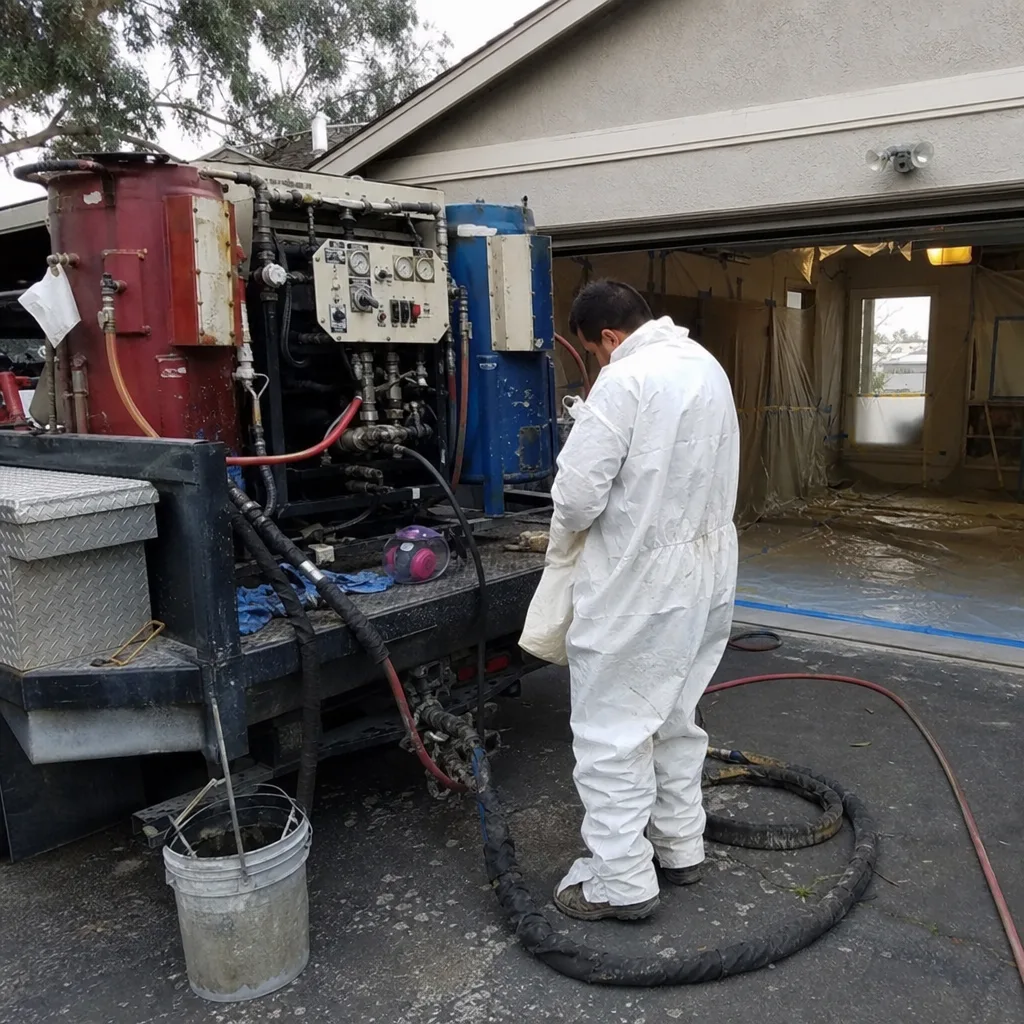
Most San Carlos crawl spaces we enter have old construction debris, rodent nesting material, or failed insulation that needs to come out before anything new goes in. We remove and dispose of it all, vacuum the space, and treat for any fungal growth we find. In homes with the original rock wool still hanging in floor joists, the cleanout alone is a full day for a two-person crew. It has to happen; you can’t install a vapor barrier over a contaminated floor.
What happens when you call
- 1
A real person answersNo phone trees — you reach a local pro.
- 2
You get an upfront price rangeHonest numbers before anyone is dispatched.
- 3
A background-checked tech heads outLicensed & insured, dispatched right away.
- 4
You approve before work beginsNothing starts until you say go.
Trusted Brands We Stock for San Carlos Jobs
We’re not tied to one manufacturer, and that matters more in San Carlos than in most markets. A flatland home near Holly Street needs a different moisture resistance profile than a canyon home off Crestview Drive. We regularly install Owens Corning rigid foam and Johns Manville vapor barriers, and we use GreenFiber cellulose when a San Carlos homeowner wants an air-sealing and insulation hybrid in a framed floor over a vented crawl space. Eight professional material lines in active use means we pick what the home’s conditions call for, not what’s sitting in the truck. For crawl space work specifically, we keep 10-mil reinforced poly, foam boards, sealants, and mechanical fasteners stocked, so a San Carlos job doesn’t stall waiting on supply runs from the East Bay.
Common Crawl Space Problems We See in San Carlos Homes
- Compressed rock wool in hillside homes. Original rock wool or early fiberglass absorbs fog moisture, loses its loft, and slumps. R-value drops toward zero. It’s usually matted with dust and rodent droppings by the time we see it.
- Vapor barriers that stop at the floor. On stepped pier-and-beam foundations, a floor-only barrier leaves rim joists and band boards exposed. Fog-moist air condenses on those surfaces, and rot starts where you can’t see it from the access door.
- Bad seams in tight-clearance townhomes. Alley-loaded San Carlos townhomes with tight crawl space access often get barriers butted or overlapped incorrectly around plumbing stacks. Those pinhole gaps wick moisture right back into the space.
- Vented crawl spaces with no dehumidification. In the western hills, ambient humidity in a vented crawl space can exceed 80% for months. Venting actually makes it worse during fog season. Sealing and dehumidifying is the only fix.
Pricing for Crawl Space Encapsulation & Vapor Barrier in San Carlos, CA
| Service | San Carlos Price Range |
|---|---|
| Vapor barrier only (10-mil, floor + stem walls) | $2,800–$4,800 |
| Full crawl space encapsulation | $6,500–$14,000 |
| Crawl space insulation (rigid foam or spray foam at rim) | $1,900–$4,200 |
| Moisture control with dehumidifier | $2,200–$3,800 added to encapsulation |
| Crawl space cleanout and debris removal | $800–$1,500 |
Homes in the hills above Arroyo Avenue with stepped foundations run higher because of accessible square footage, more rim joist linear feet, and the extra labor to work around grade changes. Townhomes with tight clearances also run slightly higher per square foot than open ranch crawl spaces, simply because the work moves slower. These are real ranges from our San Carlos jobs, not national averages. Nate walks every quote himself, so you get numbers tied to your actual crawl space, not a guess from photos. Estimates are free; call (925) 574-6007 to schedule.
We Also Serve Cities Near San Carlos
Sierra Insulation Pleasanton serves San Carlos and surrounding Peninsula communities, with the same owner-led approach everywhere we go. If you’re in Atherton, Menlo Park, Palo Alto, or Portola Valley, we’re familiar with the housing stock, the microclimates, and the code requirements in each of those cities. You can read more about our work across the region on our Crawl Space Encapsulation & Vapor Barrier in San Carlos page, or call us for your nearest service date.
Serving San Carlos, CA — Our Local Coverage Area
We’re based in the San Carlos area and know this community well. Use the map below to see our service coverage — if you’re nearby, we can almost certainly help.
FAQs — Crawl Space Encapsulation & Vapor Barrier in San Carlos
The western hill neighborhoods sit in a persistent coastal fog corridor from late spring through early fall. Crawl spaces in those homes see ambient relative humidity above 80% for months at a time, while flatland San Carlos near US-101 runs warmer and drier. That difference means hillside homes need a full encapsulation with sealed rim joists and a dehumidifier, not just a floor vapor barrier. If your home is above Arroyo Avenue, expect a heavier spec. Call (925) 574-6007 for a moisture reading and a straight answer for your specific address.
Remove it completely. Rock wool and early fiberglass from that era has absorbed decades of fog moisture, compressed, and lost its thermal performance. It often hides rot on the underlying wood. We remove the failed material, clean the joist bays, address any moisture or fungal issues, and then install the correct insulation for your home’s conditions. Topping off over failed material is how you get a new vapor barrier doing nothing while the joists above it rot. Nate will show you what he finds; (925) 574-6007 is the number.
Yes. We’ve done tight-clearance encapsulations throughout San Carlos, including alley-loaded townhomes where the entire crawl space is accessible only from a two-foot door. We use smaller equipment, move materials in sequentially, and plan each seam around plumbing stacks and support piers before we start. It takes longer per square foot than an open ranch crawl, and the price reflects that, but a proper seal is absolutely possible. Call us at (925) 574-6007 and describe your access; we’ll tell you if it’s workable and what to expect.
You have to treat each step as a separate plane and seal the transitions. On a stepped pier-and-beam foundation, we run the vapor barrier up each vertical face, mechanically fasten it, and then tape the overlap to the next horizontal run. The rim joists and band boards at each step get sealed with rigid foam or spray foam so fog-moist air can’t condense behind the barrier. A single continuous sheet laid over the steps will eventually tear at the transitions; that’s the failure we see in homes above Arroyo Avenue. We fix it by doing it right from the start.
It affects the reading, not the calendar. We can encapsulate any time of year, but if we inspect during the dry months, we get a baseline reading that may mask how wet the space gets in July. If possible, we like to take moisture readings in both conditions, or we size the dehumidifier for the worst-case fog season. Scheduling the work itself is fine year-round; the materials and sealants we use cure properly in cool and damp conditions. Call (925) 574-6007 and we’ll schedule around what your crawl space is actually doing, not the month on the calendar.
Call Sierra Insulation for Crawl Space Work in San Carlos
Nate Caldwell leads every San Carlos crawl space job himself, from the first moisture reading to the final seam tape. You get the owner on site, not a rotating crew. If you’re in the hills above Arroyo Avenue, near Crestview Drive, or in a tight-clearance townhome off El Camino, we know what your crawl space is doing. Estimates are free, and we’d rather show you the problem on a meter than sell you a fix you don’t need.
Call (925) 574-6007 to schedule your San Carlos crawl space assessment.
Written by Nate Caldwell, Owner at Sierra Insulation Pleasanton, serving San Carlos and the surrounding Peninsula.