
Trusted Home Energy Audit for Pleasanton Homeowners
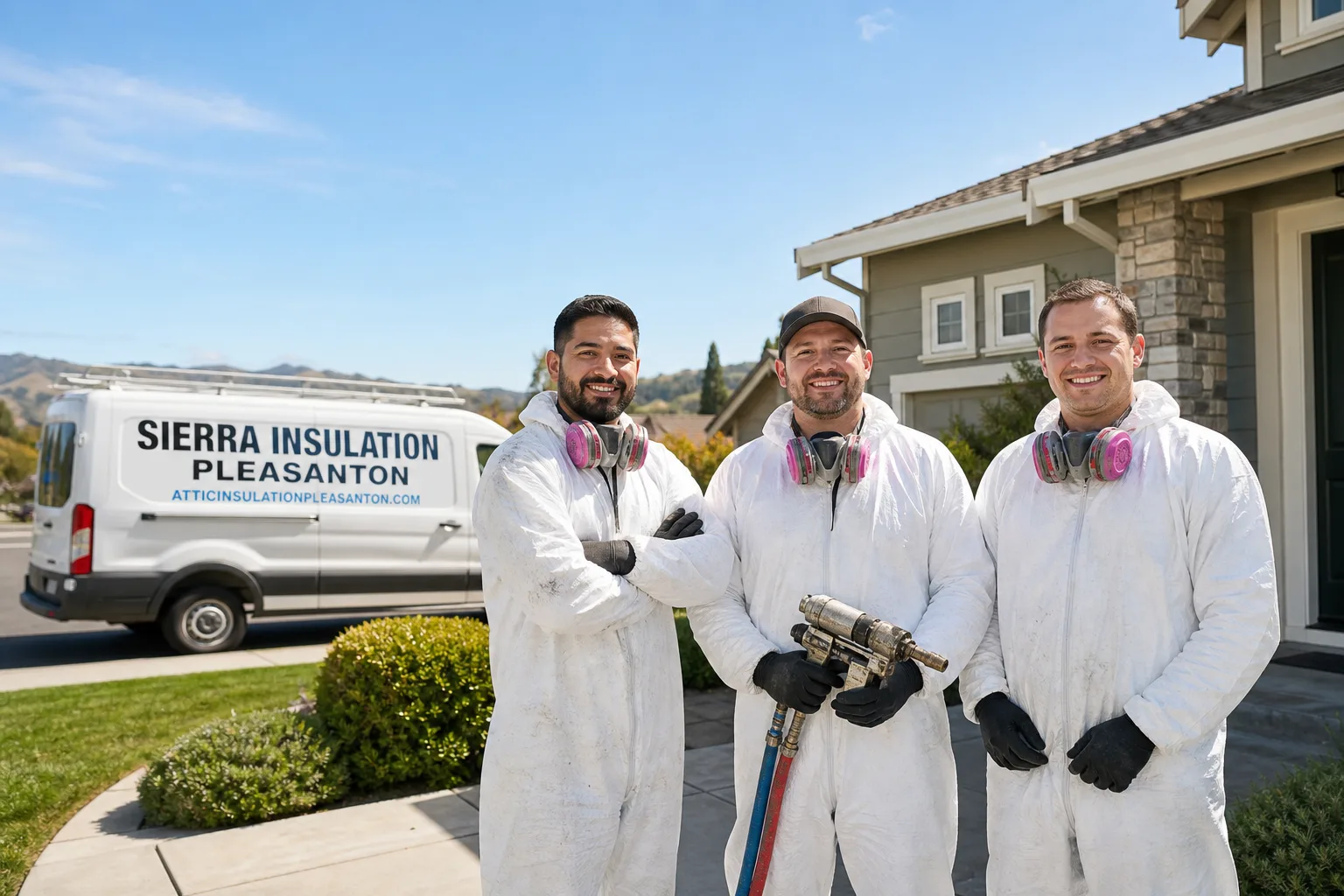
Most Pleasanton homes leak. Not water, but conditioned air. Your HVAC system works to cool or heat air, and it escapes through gaps in your attic floor, around recessed lights, through unsealed wall plates, and into your crawl space. The result isn’t subtle. It shows up every month on your PG&E bill, and it shows up as that upstairs bedroom that never cools down in August. A home energy audit finds these leaks with measurable data, not guesswork. Sierra Insulation Pleasanton performs Home Energy Audit in Pleasanton as a stand-alone diagnostic service, and our owner Nate Caldwell leads every inspection personally. If you want to know exactly where your home is losing energy before spending money on fixes, call (925) 574-6007.
We’re not a general contractor who added energy audits to a brochure. We’re insulation specialists who use diagnostic tools daily. The audit tells us, and you, what’s actually wrong. That’s the honest order of operations: we find the problem before we sell you the fix.
What Our Home Energy Audit Service Includes
A proper home energy audit in Pleasanton goes well beyond a walkthrough. It’s a systematic inspection of the home‘s thermal boundary, the barrier between your conditioned living space and the unconditioned outside. We use calibrated instruments to measure air leakage, thermal gaps, duct performance, and insulation coverage. Each of the four diagnostic components below targets a specific failure point we see in Pleasanton homes built from the 1970s through the 2000s.
Blower Door Test
A blower door test measures the total air leakage in your home. A calibrated fan is mounted in an exterior door frame, and it depressurizes the house to a standard pressure while sensors measure exactly how much air is pouring back in through the building shell. In Pleasanton, we routinely find homes that test at 2,000 to 3,500 CFM50, meaning the equivalent of a window left open 24 hours a day is built into the house itself. Sierra Insulation Pleasanton runs this test on every audit, and the number we get becomes the baseline that tells us whether air sealing work actually solved the problem or just made you feel better about it.
Thermal Imaging Inspection
Infrared cameras show temperature differences across surfaces, and those differences reveal what the naked eye can’t see. A cold stripe across a ceiling indicates a gap in attic insulation. A warm band along an exterior wall reveals missing batts or thermal bridging from uninsulated framing. In Pleasanton’s summer heat, where attic temperatures routinely hit 130 degrees, the temperature contrast makes these scans especially clear. We use thermal imaging to map exactly where insulation is failing, which means our recommendations are based on evidence, not assumptions.
Insulation Inspection
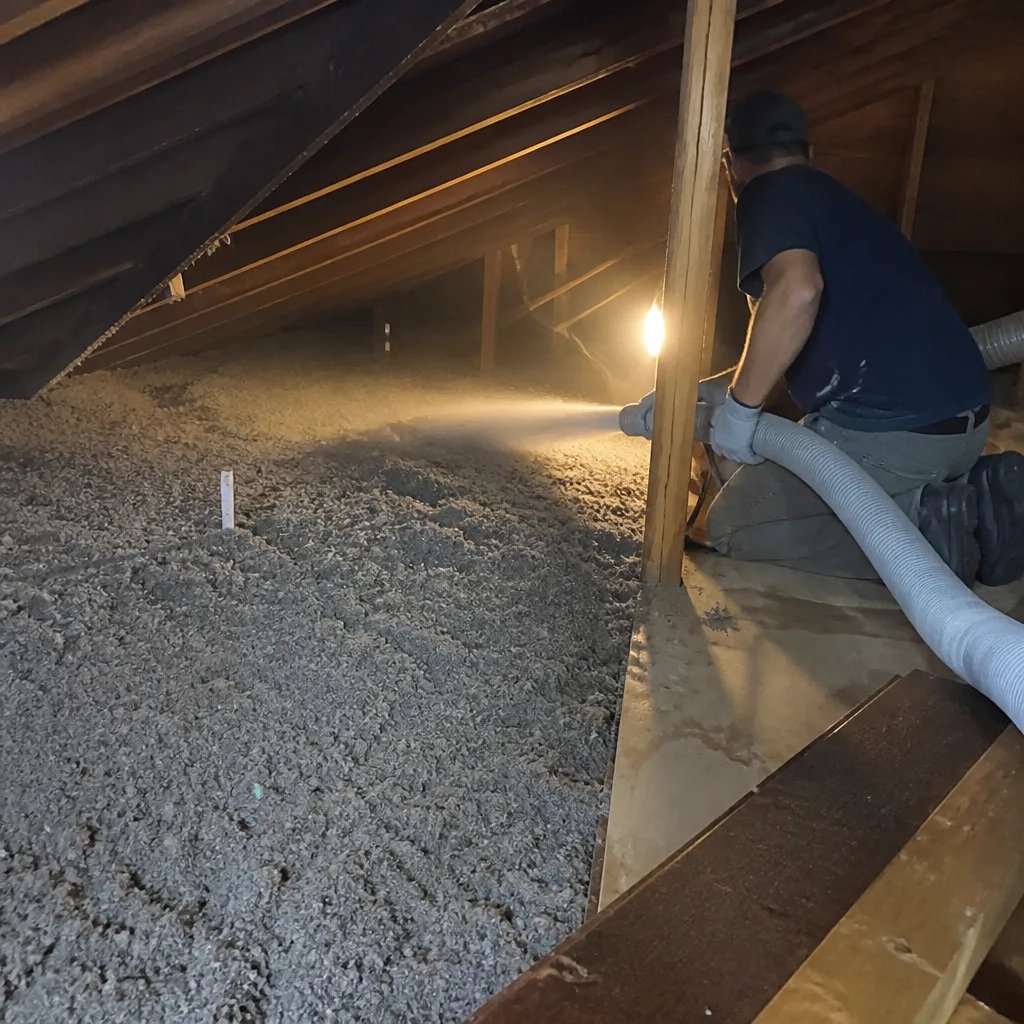
Most insulation inspections by insulation companies are really just a quick peek at the attic with a flashlight, followed by a quote. Ours is a measured assessment of what’s up there and what it’s doing. We document the type of insulation, its depth, its R-value across different zones of the attic, and whether it’s been compressed, displaced, or contaminated by rodents or moisture. In Pleasanton, we regularly open attics that have the original 4 inches of fiberglass from when the house was built, which reads as R-11 or R-13 on our readings. Current code for this climate zone calls for R-38 or higher. That gap is real money out of your pocket every month.
Duct Leakage Test
Ductwork in Pleasanton homes is often buried in the attic, where it’s exposed to the hottest air in the building. If those ducts have gaps or disconnected joints, you’re paying to cool your attic. A duct leakage test uses a calibrated fan and pressure gauge to quantify how much conditioned air is escaping your ductwork before it ever reaches a register. We find duct systems in Pleasanton that leak 20 to 30 percent of the air moving through them. That’s a finding most homeowners never discover because most contractors never test for it. Sierra Insulation Pleasanton does.
What happens when you call
- 1
A real person answersNo phone trees — you reach a local pro.
- 2
You get an upfront price rangeHonest numbers before anyone is dispatched.
- 3
A background-checked tech heads outLicensed & insured, dispatched right away.
- 4
You approve before work beginsNothing starts until you say go.
Brands We Service for Home Energy Audit
Because we stock and install eight professional-grade insulation brands, our audits are informed by what actually works in different situations. When we inspect an attic that has Owens Corning fiberglass batts, we know exactly how that material performs when installed correctly, and how it fails when installed poorly. We can tell you whether it should be topped up, replaced, or supplemented with air sealing rather than simply quoting a blanket replacement. The same applies to Johns Manville blown-in products and Knauf batts, both of which we carry and work with regularly.
Our familiarity with GreenFiber cellulose matters in audits too. Cellulose performs differently than fiberglass in terms of air infiltration resistance and moisture behavior, and knowing those differences helps us make better recommendations for Home Energy Audit in Newark and Home Energy Audit in Sunol homeowners, many of whom have older homes with blown-in cellulose from previous retrofits. Whatever brand is currently in your attic, walls, or crawl space, we can assess it accurately because we’ve installed and inspected all of them.
Signs You Need Home Energy Audit Right Now
- Your energy bills keep climbing while your usage habits haven’t changed. PG&E rates in Pleasanton have risen substantially over the past few years, but rate increases alone don’t explain bill spikes in homes that are well sealed. If you’re paying more every summer while keeping the thermostat at the same setting, your home’s envelope is likely losing more conditioned air than it did a few years ago. Insulation settles, compresses, and degrades over time, especially under the relentless heat of an East Bay attic.
- Some rooms are consistently 5 to 10 degrees warmer or cooler than the rest of the house. Uneven temperatures are a direct symptom of insulation gaps, duct leakage, or both. The rooms that face west in Pleasanton take the brunt of the afternoon sun, and if those walls or the attic above them aren’t properly insulated, no amount of thermostat adjustment will fix the problem. A thermal imaging inspection pinpoints exactly which surface is failing.
- Your home feels stuffy or smells musty, especially in summer. Air that can’t move properly through a properly ventilated attic or crawl space gets stale, picks up moisture, and creates that closed-up feeling. This is frequently a moisture and ventilation issue that shows up on an audit as high humidity levels in the crawl space or inadequate attic baffles and vents. It’s a comfort issue, but it’s also a warning sign for mold and wood rot if left unaddressed.
- The AC runs constantly on hot afternoons and still can’t keep up. In Pleasanton’s summer heat waves, when outdoor temperatures push past 100 degrees, a properly insulated and sealed home can still maintain indoor comfort without running the compressor into the ground. If your AC unit is new or recently serviced and the house still won’t cool, the problem is almost certainly the envelope, not the equipment.
- You can feel drafts near windows, outlets, or baseboards in winter. Pleasanton winters are mild by national standards, but a cold morning still makes air leakage obvious. Feel air moving near an exterior wall outlet or baseboard, and you’re feeling a direct connection to the outside. Those are exactly the gaps a blower door test quantifies and an air sealing job eliminates. You don’t need a new furnace; you need the holes closed.
Our Home Energy Audit Process — Step by Step
Our process is designed to produce a clear, ranked list of problems and fixes, not a sales pitch. Every step is documented and every recommendation is tied to a measurement or an observation. You’ll get the full picture in a written report when we’re done.
- 1
Initial walkthrough and interview. We start by walking the property with you, inside and out, and asking about the specific issues you’ve noticed: hot rooms, high bills, drafts, smells, anything that brought you to call us. This part takes about 30 minutes and gives us a map of the complaints to match against our test results. Nate Caldwell leads this conversation, so you’re talking directly to the person who will be interpreting the data.
- 2
Blower door test and baseline measurement. We mount the blower door in your front or back door frame and depressurize the house to measure total air leakage in CFM50. This number is the single most important data point in the audit. It tells us how leaky the home is overall, and combined with the thermal imaging that follows, it shows us where the leaks are concentrated.
- 3
Thermal imaging scan of all conditioned surfaces. With the blower door running, we scan ceilings, walls, floors, around windows, and through attic access points with an infrared camera. The depressurization pulls outside air through every gap, which makes thermal anomalies dramatically more visible. We photograph everything and mark the locations for the report. This is the step where missing insulation, thermal bridging, and air infiltration show up as clear visual evidence.
- 4
Duct leakage test with a duct blaster. If your home has forced air heating and cooling, we connect a calibrated duct tester to the system and pressurize it to measure leakage. The reading tells us what percentage of the air your HVAC system moves is being lost to the attic, crawl space, or walls. We test both supply and return sides where the system allows. This is the test most Pleasanton homeowners have never seen done, and it frequently reveals losses of 20 percent or more.
- 5
Insulation inspection and written report. We inspect every accessible insulation cavity: attic, crawl space, and exposed wall areas. We measure depth, identify the material type and brand, and note any damage from moisture, rodents, or age. Then we compile everything into a report that ranks issues by severity and estimated energy impact. You’ll know exactly what’s wrong, why it matters, and what it will take to fix it. There’s no pressure to hire us for the repairs. The report is yours to use however you choose.
How Much Does Home Energy Audit Cost in Pleasanton?
A full home energy audit in Pleasanton, including all four diagnostic tests, typically runs how much Home Energy Audit costs — $350 to $600 — depending on home size, accessibility, and the complexity of the duct system. A smaller single-story home under 1,500 square feet usually falls toward the lower end, while a two-story home with multiple HVAC zones and a complicated attic will cost more. A standalone blower door test without the full audit typically runs $200 to $300, and a duct leakage test alone is $150 to $250.
What affects the price: the size of the home, the number of attics and access points we need to reach, the number of HVAC zones, and whether the crawl space is accessible or requires special entry. Homes with finished attics or tight roof clearances take more time. The best way to avoid overpaying is to hire a company that does audits regularly, not one that treats it as an add-on. And be wary of any contractor offering a “free energy audit” as a lead generator for a replacement quote. An audit that costs nothing is a sales pitch. Sierra Insulation Pleasanton provides a written report with every audit, and we quote any recommended work separately. Call (925) 574-6007 for a specific quote on your home. Estimates are free and come with no obligation.
Home Energy Audit Near Pleasanton — Our Service Area
Sierra Insulation Pleasanton serves homeowners throughout the Tri-Valley and the broader East Bay and Peninsula. We perform Home Energy Audit in Pleasanton and regularly work in Newark, Sunol, Union City, Milpitas, East Palo Alto, Menlo Park, Mountain View, Atherton, Palo Alto, and Los Altos. In most of these areas, we can schedule an audit within a week, and same-week appointments are often available in Pleasanton, Newark, and Sunol. If you haven’t found a Home Energy Audit in Pleasanton company that will actually test your home before quoting insulation work, you’ve found one now.
Serving Pleasanton, CA — Our Local Coverage Area
We’re based in the Pleasanton area and know this community well, and we also provide Home Energy Audit — Sunol services nearby. Use the map below to see our service coverage — if you’re nearby, we can almost certainly help.
Frequently Asked Questions — Home Energy Audit in Pleasanton
A home energy audit is a diagnostic assessment of how well your home’s building envelope controls heat flow, air leakage, and moisture. It uses calibrated instruments, including a blower door, infrared camera, and duct tester, to measure where and how much energy your home is losing. The result is a detailed report identifying specific problems: air leaks in the attic floor, missing wall insulation, leaking ducts, or ventilation issues. In Pleasanton, where summer cooling loads dominate, these findings translate directly into higher PG&E bills. We also offer Home Energy Audit in Union City. Call (925) 574-6007 to schedule an audit and get the specific numbers for your home.
A full audit on a typical Pleasanton home takes between 2 and 4 hours, depending on the size of the house and the complexity of the systems. Single-story homes under 2,000 square feet with one HVAC zone are usually on the shorter end, while two-story homes with multiple attics, a crawl space, and two HVAC zones take longer. The blower door test itself takes about 20 to 30 minutes, but the thermal imaging scan and duct testing add significant time. We don’t rush the process because the quality of the data depends on doing each test carefully. Call (925) 574-6007 and we’ll give you a realistic time window for your specific home.
A full home energy audit in Pleasanton typically costs between $350 and $600, with the final price determined by home size, accessibility, and the number of HVAC zones. Standalone tests are less: a blower door test alone runs $200 to $300, and a duct leakage test alone is $150 to $250. Sierra Insulation Pleasanton gives you a precise quote before we start, and the audit cost is separate from any repair work we recommend. Call (925) 574-6007 for an exact quote; estimates are free.
Yes, we inspect and assess homes with Owens Corning, Johns Manville, Knauf, GreenFiber, and every other major insulation brand during our audits. Because we install all of these materials ourselves, we know how each one performs when installed correctly and what failure looks like when it’s not. That brand-specific knowledge means we can tell you accurately whether your existing insulation needs to be replaced or simply supplemented. Call (925) 574-6007 to schedule an audit and we’ll identify exactly what’s in your attic and what condition it’s in.
We can often schedule an audit within a few days in Pleasanton, and during busy seasons, we do our best to accommodate urgent requests when the schedule allows. If you have a specific issue, like a major air leak that’s driving your bills up or a moisture problem you need assessed quickly, we’ll prioritize your call and try to get to you within the week. Call (925) 574-6007 and tell us what’s going on. We’ll give you the soonest available appointment.
Yes, we stand behind the accuracy of our diagnostic work. If we perform an air sealing or insulation repair based on our audit and the problem isn’t resolved, we’ll come back and retest to find out what was missed. The audit itself is a measurement, not a repair, and the measurements are objective: CFM50 readings, duct leakage percentages, and thermal images don’t lie. Call (925) 574-6007 if you have questions about what an audit covers and how we follow up on the findings.
Preparation is simple. Clear access to the attic hatch, the crawl space entry, and your electrical panel so we can move through the house efficiently. Close all windows and exterior doors, and turn off combustion appliances like gas stoves and fireplaces before we start the blower door test, for safety. Make a list of the specific problems you’ve noticed, like hot rooms or drafts, so we can make sure we investigate every one. We’ll handle everything else, including all the equipment and the full report. Call (925) 574-6007 to schedule your audit.
Schedule Your Home Energy Audit Service in Pleasanton Today
You’ve been guessing at your home’s energy problems long enough. A diagnostic audit gives you the actual data: where the leaks are, how big they are, and what it will take to fix them. Call Sierra Insulation Pleasanton at (925) 574-6007 and schedule your audit today. The estimate is free, the report is yours to keep, and you’ll finally know what’s going on inside your walls and attic. Nate Caldwell will be the one walking you through it.
Written by Nate Caldwell, Owner at Sierra Insulation Pleasanton, serving Pleasanton and the surrounding Bay Area.